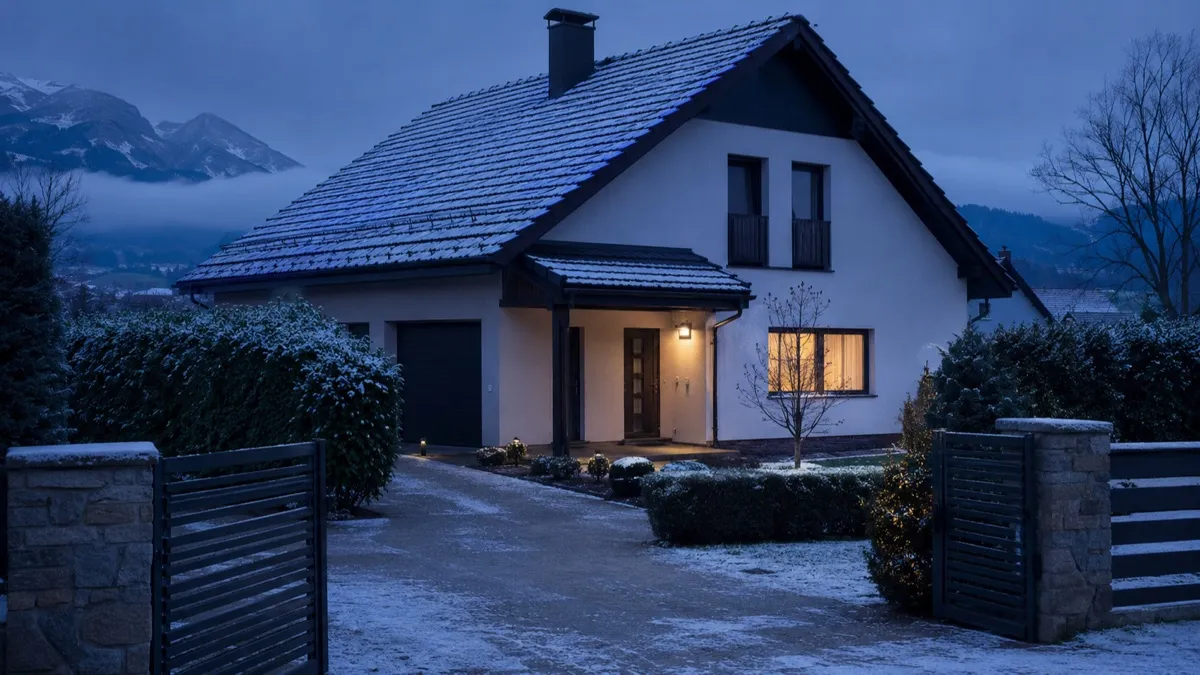
Christmas and New Year: Your Slovenian Home While You're Away
Why the Christmas and New Year holidays are a particular risk period for an empty home in Slovenia, and what to prepare if you're spending them somewhere else.
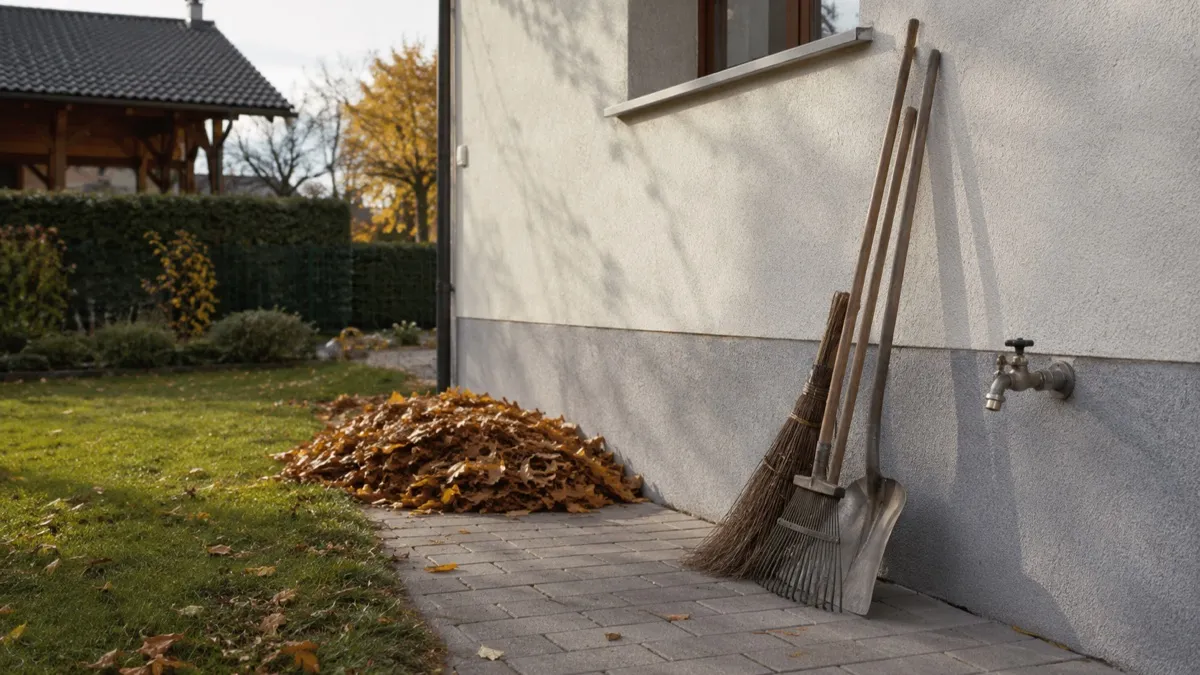
Winter in Slovenia is not only snow. The most dangerous period for a home is not the coldest days of January, but the transition from a warm October to the first night frosts. That is exactly when one forgotten outdoor pipe or one uninsulated section of plumbing turns into a crack you only discover after you have already faced several thousand euros of damage.
Below is a practical week-by-week calendar: what to do in October, what to do in November, and what owners who are only in the house occasionally should pay particular attention to. The recommendations draw on advice from Eko sklad (Slovenia’s state environmental fund), the insurance company Generali, the ENSVET network, which provides free energy consultations, and on the many years of experience of the DomCare team maintaining houses and apartments in Slovenia — every season we carry out most of the work described here for our own clients.
Slovenia is extremely varied within a small space. The alpine region (Bled, Bohinj, Kranjska Gora) gets its first night frosts as early as the second half of October. Central Slovenia and the Ljubljana basin — usually in the first days of November. The Coast (Piran, Portorož, Koper, Izola) almost never freezes before December, but it brings a different challenge — strong bora wind and salty sea air, which wear down the façade, the seals, and metal elements significantly faster.
Owners who are not in the house all year round have an extra difficulty. If a pipe bursts at the end of October, the water can run for two or three weeks before anyone notices. Such damage often exceeds the insurance cover if there is no documentation of the preventive work carried out. So for an empty home, preparing for winter is not a question of “when”, but a question of “who will actually do it”.
The first task is not work, but an inspection. Walk through the house and the plot with a list in hand and note what is in poor condition. Working from a priority list is much easier than working from memory once the first snow is already close.
What to check on the first walk-through:
The second important step at this stage: book the chimney sweep’s date now, not at the last moment. Late October and November are the busiest months for chimney sweeps, and a wait of 4–6 weeks is normal. It makes sense to book the boiler or gas equipment service at the same time.
This is the week the real work begins. The most important thing is the outdoor plumbing. The process itself takes 20–30 minutes, but it prevents thousands of euros of damage.
Outdoor taps and garden hoses — step by step:
Gutters: clear dry leaves from the gutters and downpipes. A clogged gutter is a common source of a winter basement flood: the water, finding no way into the drainage, starts running down the façade, finds the smallest crack, and widens it when it freezes.
Garden and plot:
Indoor water pipes in unheated spaces — basement, attic, garage, garden shed — need extra insulation. A pipe in a garage where the temperature drops to 2 °C in winter does not freeze every year, but in one particularly cold winter it bursts. Polyethylene foam insulation is sold in any building supply shop, costs a few euros per metre, and you can install it yourself in an hour.
The heating system:
Heat pump: clean the outdoor unit of leaves and branches. Check that the condensate drain pipe is not clogged — if it freezes, the pump will not work properly.
Under the Slovenian Chimney Sweep Services Act (Zakon o dimnikarskih storitvah), you as the owner of a heating appliance are obliged to book an annual chimney inspection. The chimney sweep cleans the heating appliance and the chimney, measures emissions, and checks the safety elements.
The inspection is not just an administrative formality. An uncleaned chimney is one of the most common causes of a house fire: soot builds up on the inner walls of the chimney and can ignite if it overheats.
The typical price of an inspection for a standard heating appliance: €40–80, depending on the type of equipment and the region. For houses with gas heating, a similar obligation applies — a service of the gas equipment as prescribed by the manufacturer, usually once every 12 months.
Checking the window and door seals: place a sheet of paper between the frame and the sash, close the window, and try to pull the sheet out. If it comes out without resistance, the seal is worn. Replacing a seal costs €5–15 per window and usually pays for itself within one winter through a reduced heating bill.
Attic insulation: check whether the mineral wool or other insulating material has compacted in places, mixed with dust, or torn. According to the consultants of the ENSVET network, the attic is the main point of heat loss in a house: in poorly insulated old houses, up to 30 percent of the heat escapes through it.
Garage door: check the bottom seal and the side seals. A garage connected to the house is a common route by which cold gets in unnoticed. A new seal for €20 solves this problem for years.
Air intake for the boiler room: check that the grille supplying fresh air to the boiler room is not clogged with leaves or snow. Eko sklad emphasises that regularly checking such grilles is one of the key tasks before the heating season.
In winter, the number of burglaries in Slovenia rises noticeably, especially in empty houses in rural areas, in country homes on the coast, and in the alpine regions. The insurance company Generali notes in its recommendations for country homes: when intruders see that a house has been empty for a long time, an attempted break-in follows quickly.
Practical measures without large costs:
More serious measures (an alarm, video surveillance, physical security) make sense for houses with valuable contents or on isolated plots. For a standard house in a populated place, the steps listed above are enough.
The hardest question for an owner who is abroad or only occasionally in Slovenia: how to be sure that nothing bursts, grows mould, or is broken into — and all of it without being physically present?
The four main threats to an empty home in winter:
Practical measures that reduce the risk:
1. “October is still warm, I’ll wait.” The first night frosts in Ljubljana often come as early as the first ten days of November, and in the alpine areas — in the last week of October. ARSO publishes seasonal weather forecasts, which let you track the expected start of frosts for your region. If you wait for “real cold”, you will be too late.
2. Everything left for the last week before the snow. A chimney sweep in the second half of November is fully booked. So are the boiler services. What can be done in October, do in October — otherwise you will pay significantly more for urgent call-outs.
3. Closed the water, but did not drain the pipes. Water left in the pipes and frozen bursts the pipe exactly where the internal pressure is strongest. Always follow the correct order: close the valve → open the tap → leave it open all winter.
| Task | Owner | Specialist |
|---|---|---|
| Draining the outdoor taps | ✓ | |
| Cleaning the gutters of a single-storey house | ✓ | |
| Cleaning the gutters of a multi-storey house | ✓ | |
| Boiler service | ✓ (authorised service) | |
| Chimney inspection | ✓ (mandatory by law) | |
| Replacing window seals | ✓ | |
| Roof inspection | limited | ✓ for a full inspection |
| Heat pump service | ✓ (authorised service) | |
| Attic insulation | limited | ✓ for work with mineral wool |
| Preparing an empty home without the owner | ✓ recommended | |
| Monthly monitoring in winter | ✓ essential for absent owners |
At DomCare we specialise in maintaining houses and apartments in Slovenia that their owners visit only occasionally or whose owners live abroad. Winter preparation is a standard part of our property care subscription.
As part of the Property Care subscription we carry out: an inspection of the house with a photo report, closing and draining the outdoor taps, coordinating the chimney sweep and service providers, checking the plot and the gutters, seasonal garden tasks, monthly visits throughout the winter with a written report, and, where needed, a prompt response.
For a one-off preparation without a subscription, a One-off Visit is available — our team comes on an agreed date and carries out all the points of the calendar in this article.
For houses with a large garden or plot, we offer Garden & Outdoor — separately or as an add-on.
The easiest way to talk it through: write to us via the form or on WhatsApp.
When exactly should you start preparing a home for winter in Slovenia? The best time is mid to late October. In the alpine region, a week or two earlier (mid-October); in the Ljubljana basin, by the end of October; on the Coast, by mid-November. It makes sense to do the inspection and book the chimney sweep as early as September.
How much does a full winter preparation of a home cost? The main expense is the work of outside specialists: the chimney inspection and the boiler service together usually come to around €100–200, with the exact amounts depending on the region and the type of equipment. Replacing seals and minor materials — another few dozen euros. If a service company carries out the preparation itself, its visit is charged separately — see the service page for current rates.
Do I need to close the water if I leave the house for just two weeks? If the house will be entirely without heating — definitely yes. If the heating stays on at 12–14 °C and the house is in a town with a low chance of a prolonged power cut, you can leave the main valve open. The outdoor taps, however, must be drained in any case.
Does insurance cover damage from frozen pipes? As a rule it does, but the insurance policy often includes an obligation for the owner to take “minimum measures to prevent damage” — closing the outdoor taps, keeping the heating on in an empty property, the chimney inspection. If these measures were not taken, or there is no documentation, the insurer may reduce or refuse the payout. Check your policy or ask the insurer directly.
How often is a chimney inspection mandatory? Under the Chimney Sweep Services Act, once a year. The inspection includes cleaning the heating appliance, the chimney, and a measurement of flue gas emissions.
What if I am already abroad and have prepared nothing? It is not too late, as long as steady frosts have not yet arrived. Call a local service (us included) — in a single visit, the key measures can be carried out: closing the water, inspecting the heating, cleaning the gutters, plus sending you a photo report. See the service page for current One-off Visit rates. At the same time, book the chimney sweep if there has not yet been one this year.
Winter is not an event but a process. A home that is prepared in October and November protects you and your wallet. A home that waits for the first snow presents you with a surprise in the form of a bill.
If you need help preparing your property for winter — especially if you are not in Slovenia yourself or are short of time — we are here.
Why the Christmas and New Year holidays are a particular risk period for an empty home in Slovenia, and what to prepare if you're spending them somewhere else.
How the short-term rental season on the Slovenian Coast works from April to October: how to launch the season, get through the operational peak and close it on time.
What happens to a garden and home in Slovenia over the summer while the owner is away, why watering and mowing can't be paused, and how to organise care for the whole season.
Tell us about your situation — we'll agree on the format and a fixed price. The first assessment visit is free.