A Coastal Home from October to March: Off-Season Without Damage
How to prepare a home on the Slovenian Coast for the off-season and get it through unharmed: the risks of the bora wind, salt air and damp from October to March.
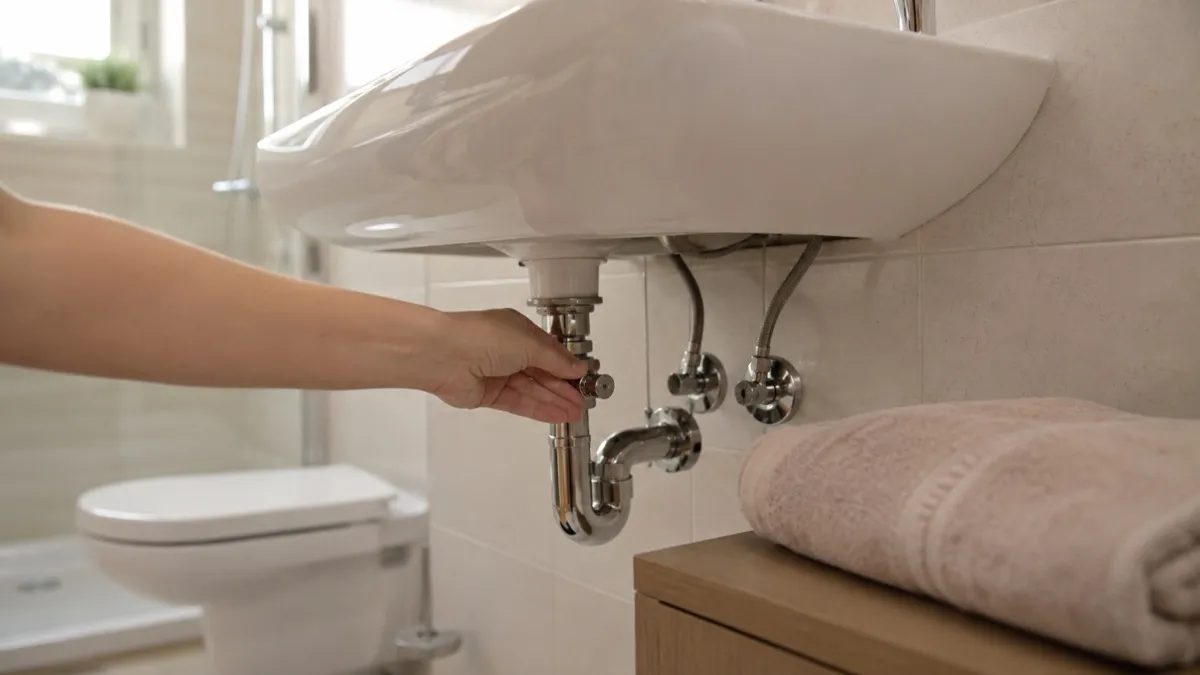
A call or message from the neighbours below: “We’ve got a wet patch on the ceiling, it looks like it’s coming from you.” You’re in another country, a thousand kilometres from Slovenia, your apartment is locked, and you have no idea what’s happening inside. This is one of the most stressful situations a remote owner can face — and at the same time one of those where the right actions in the first hours decide almost everything.
This article is a step-by-step plan: what to do right now, who needs to get into the apartment, what happens next with the damage, and how to make sure it doesn’t happen again.
This material draws on Slovenian home insurance practice, housing legislation, and years of experience from the DomCare team responding to apartment emergencies for remote owners.
A leak is behind roughly a third of all serious property emergencies. And it’s most dangerous precisely in a remote owner’s empty apartment, because three factors come together here.
First: no one sees it start. In a lived-in apartment you’d notice a drip straight away. In an empty one, water can run for hours or days before it shows up at the neighbours below.
Second: the owner is far away. You can’t rush over and shut off the water. Between you and the problem there’s a border, an airport, a time zone.
Third: the damage grows every hour. A leak is not a static problem. The longer it runs, the more it damages your apartment, the neighbours’ apartment, and with it the sum someone will have to compensate.
Understanding these three factors sets the main principle: with a leak, the clock counts in hours, not days.
The most expensive mistake in this situation is to delay acting. “I’ll fly over in three days and sort it out” doesn’t work here: in three days a wet patch at the neighbours’ turns into collapsed plaster, ruined wiring, and a bill that grows several times over.
So your job as a remote owner is not to solve the problem in person (that’s impossible), but to set the solution in motion through other people’s hands on the ground as fast as possible. Everything you do in the first hour is organising, not repairing.
Step 1. Don’t panic, but act immediately. Take the neighbours’ call seriously, even if “everything seemed fine at my place.” The source of a leak is often not obvious.
Step 2. Contact whoever has access to your apartment. This is the key moment. If you have a Key Holding service, a trusted person, or a neighbour with a spare set — call them immediately. The main task of the first hour is for someone to get inside.
Step 3. Arrange to shut off the water. Whoever gets into the apartment should first shut off the main water valve. That stops the damage from growing. If you know where the valve is, explain it; if not, the person on the ground will find it.
Step 4. Contact the building manager (upravnik — the building’s property manager). The manager is needed if the leak may be linked to the building’s common property (a riser, shared utilities) — then it’s their area. If your own private plumbing is leaking, that’s your area, but the upravnik is still useful as a coordinator.
Step 5. Document everything with photos. Both in your apartment and (where possible, with the neighbours’ consent) in theirs. Photo documentation will be needed for the insurer and for understanding who is responsible for what.
Step 6. Notify the insurance company. Most policies require you to notify the insurer within a certain time. Do it as early as possible.
Step 7. Call a contractor to fix the cause. The closed valve has stopped the water, but the cause (a burst pipe, a faulty appliance) needs fixing. That’s a plumber (vodovodar) or, depending on the cause, another specialist.
Notice: almost all the steps are communication and organisation. Someone on the ground physically shuts off the water and fixes the cause. Your role is to set all of it in motion fast.
This is the bottleneck of the whole situation. If you don’t have someone who can get into the apartment within hours, every other step stalls.
The options, from best to worst: a specialist service holding your keys (arrives fast, knows what to do, shuts off the water, calls a contractor, sends photos); a trusted person or relative with a key and the competence; a neighbour with a spare key (can get in, but doesn’t always know how to shut off the water or who to call); no one — the worst case, when you have to scramble for anyone who’ll agree, losing precious hours.
This is exactly why it’s so important for a remote owner to settle the access question in advance, not at the moment of the emergency. More on that in the final section.
Once the water is off and the cause is fixed, the second phase begins:
Drying out and assessment. Soaked structures need drying out, otherwise mould appears. The damage is assessed — both in your apartment and at the neighbours’.
Restoration work. In your apartment and possibly at the neighbours’. If you’re abroad, Contractor Support helps oversee it — otherwise you end up back in the “the work is going on and I can’t see it” situation.
The question of compensation. Who compensates whom for the damage depends on the cause of the leak and on the insurance policies (yours and the neighbours’). That’s a question for the insurance company and, if a dispute arises, for a lawyer (advokat). Here that very photo documentation from the first hour is critical.
Minor restoration. Part of the work after drying out is Repairs & Handyman: touching up paint, replacing a damaged element.
The emergency has already happened — but it’s worth drawing conclusions so you don’t go through it again.
Settle the access question in advance. The most important conclusion. Someone in Slovenia should have your key and the competence to act. Key Holding is the minimum solution to exactly this problem.
Shut off the water when the apartment stands empty for long. If no one lives in the apartment for weeks, it’s better to keep the main valve closed — then a leak is physically impossible.
Regular inspection catches a problem earlier. A dripping joint, a damp patch — a regular inspection as part of Property Care spots this before it bursts.
Check your insurance policy. Make sure leaks are covered, and understand which preventive measures the policy requires of you.
In the situation described, DomCare covers that very bottleneck — access and a fast response. With Key Holding we hold your set of keys, and when a leak is reported we come out as a priority: shut off the water, assess, photograph, call a contractor, keep you informed. Contractor Support helps with the restoration work, and Property Care reduces the risk itself — regular inspection finds problems early. We work in Ljubljana, on the Slovenian Coast, in the Bled and Bohinj region, and in the Kranj region.
An urgent situation right now? Send us a message or on WhatsApp — we respond fast.
What should I do first if the neighbours report a leak coming from my apartment? Immediately contact whoever has access to your apartment so they can shut off the water. Stopping the water is the first and most important step; everything else is secondary.
I’m in another country and can’t come — what do I do? Your job isn’t to come, but to get the right people moving quickly: arrange access, shut off the water, call a contractor, notify the insurer. All of this is done remotely, by phone and messenger.
Who pays for the damage to the neighbours? It depends on the cause of the leak and the insurance policies. The insurance companies decide; in a dispute, a lawyer. That’s why photo documentation from the first hour matters so much.
Could this have been prevented? Often yes: a closed valve in an empty apartment makes a leak impossible, and a regular inspection finds problem joints in advance.
What if I have no one in Slovenia with access at all? That’s the worst-case scenario, where hours are lost. The lesson for the future is to settle the access question in advance without fail: Key Holding or a trusted person. In the moment — urgently look for a service ready to come out.
A leak to the neighbours from an empty apartment is a situation where the winner isn’t the one who’s closest, but the one who organises the solution fastest. The clock counts in hours. And it all comes down to one question you should answer in advance: is there someone in Slovenia who can get into your apartment and shut off the water while you’re still reaching for the phone.
To make sure such a person is near your property — send us a message.
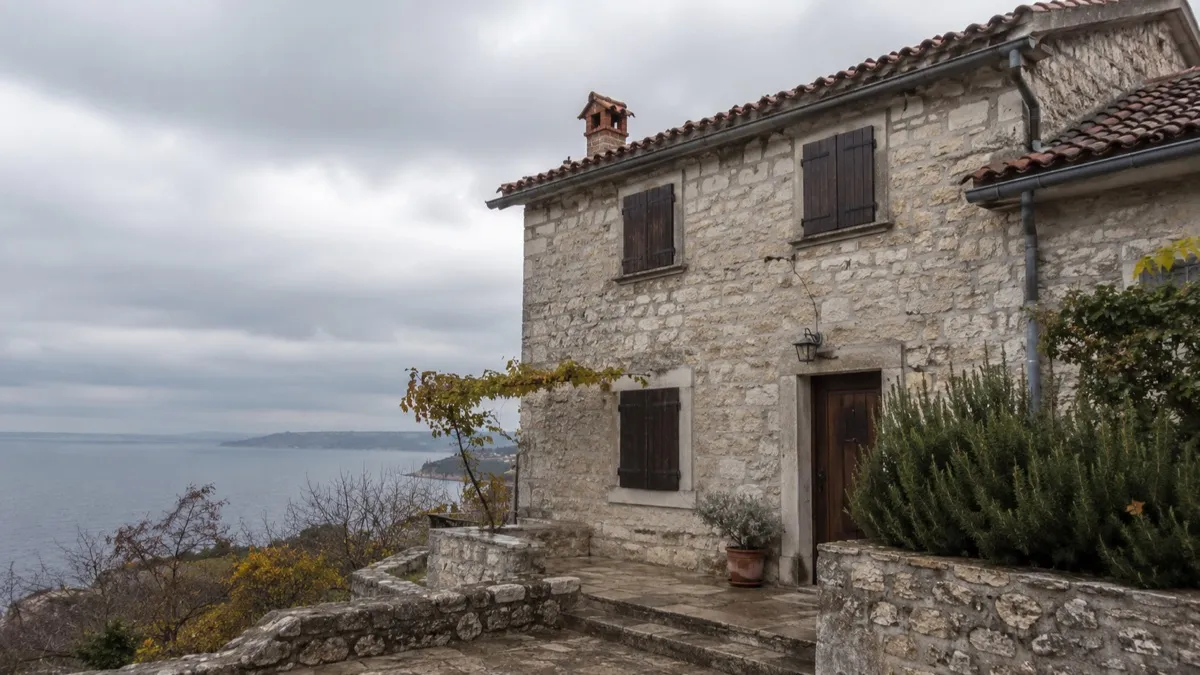
How to prepare a home on the Slovenian Coast for the off-season and get it through unharmed: the risks of the bora wind, salt air and damp from October to March.
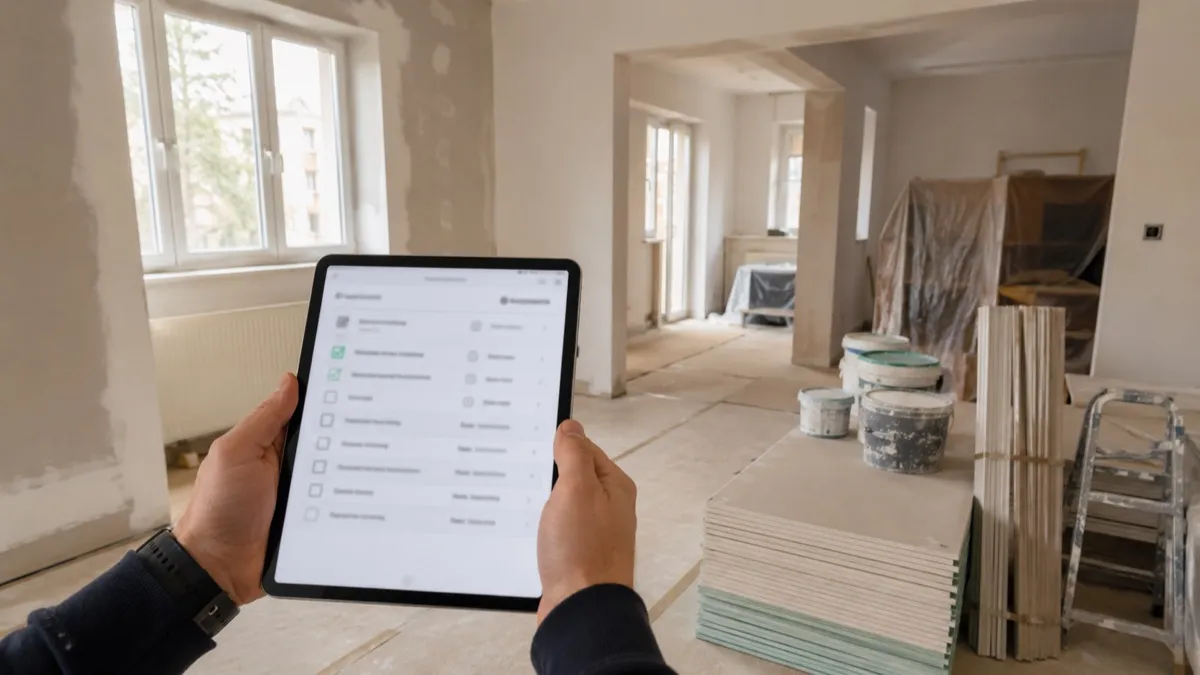
How an owner abroad can keep control of an apartment renovation in Slovenia: what to lock in before the start, the rhythm of oversight, milestone sign-offs and the typical mistakes.
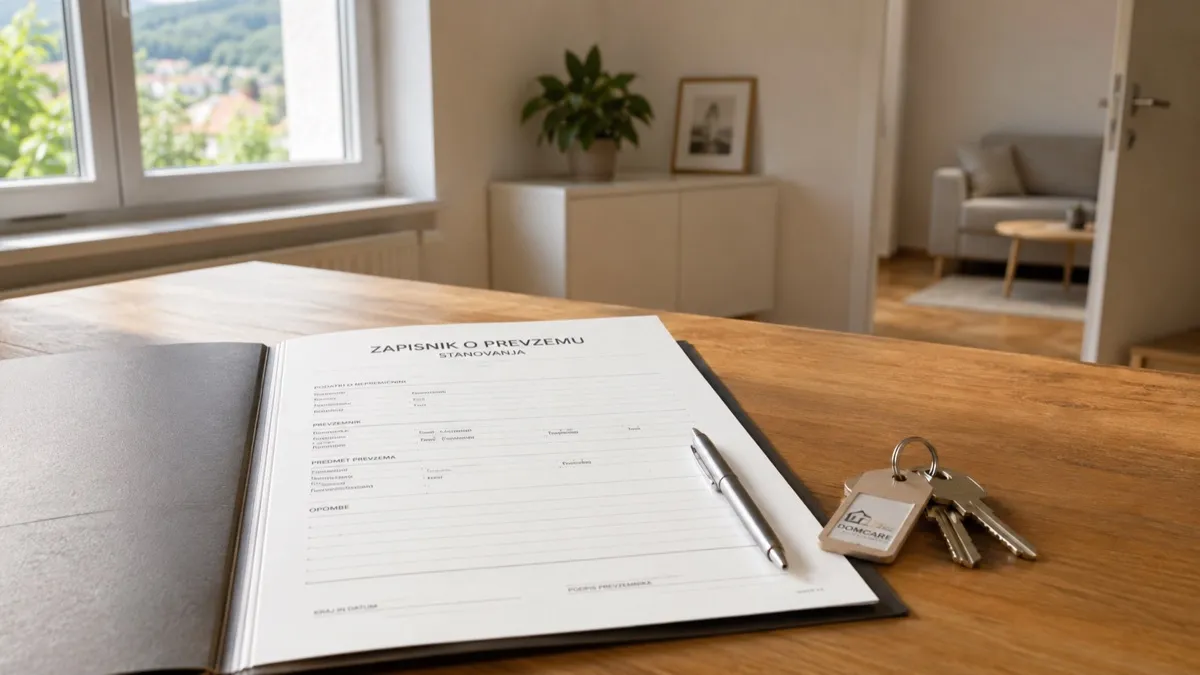
How an owner living abroad can organise the handover and return of an apartment in a long-term let in Slovenia: tenant move-in, oversight and move-out.
Tell us about your situation — we'll agree on the format and a fixed price. The first assessment visit is free.