Petr's story: he inherited his parents' apartment in Slovenia
A composite heir's story about receiving his parents' apartment in Slovenia while living abroad: the path from being overwhelmed to a calm decision about the property.
This is a composite story based on typical situations of the owners we work with. The name and details are notional. We are telling it because the path Elena took is one many people walk when they start renting out property in Slovenia.
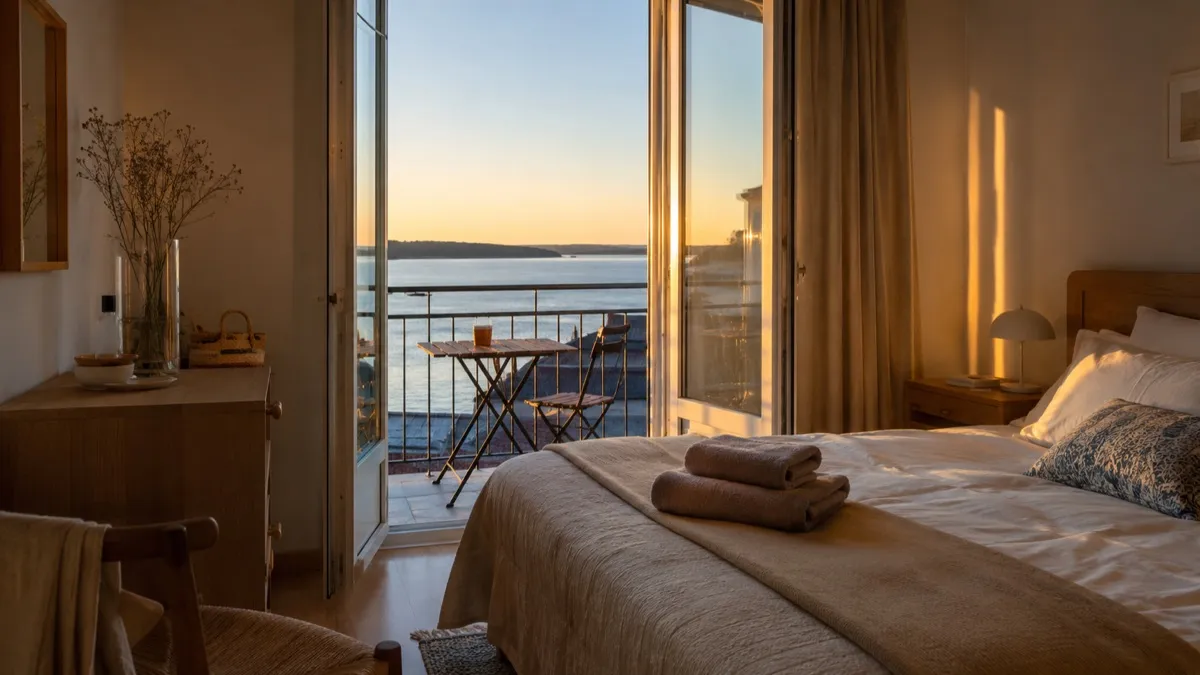
Elena has an apartment on the Slovenian coast, not far from the sea. She herself lives in another country. For several years the apartment simply stood there, with Elena occasionally coming over herself. Then she decided: let the property work — rent it out to tourists on short-term lets during the season.
The idea looked simple. The coast has a good season, the apartment is appealing, the booking platforms are easy to understand. Elena took photos, put up a listing, set her prices — and bookings came in almost straight away. She decided to run the first season entirely on her own, remotely.
The first few weeks went reasonably well. But after that Elena ran into the fact that short-term rental is not “passive income” but active operational work — and a significant part of that work requires being there on the coast, which Elena was not.
Cleaning. Elena found someone to clean between guests, but without a clear process it kept failing: either the cleaning did not get done in time on a changeover day, or the quality “drifted.” A couple of times guests checked into an insufficiently cleaned apartment — and it showed up in the reviews straight away.
Check-ins. Several times guests could not get into the apartment: a mix-up with the code, or a late arrival. Elena tried to sort it out by phone from another country, getting anxious right alongside the guests.
Breakdowns. At the height of the season the air conditioning stopped working properly — with guests in residence, in the heat. Elena, in a panic, searched for a tradesman in an unfamiliar situation, losing time and collecting guest complaints.
By the end of the first season Elena took stock. There was income — but it came at the cost of constant stress, several painful reviews that pulled down the property’s rating, and the feeling that she was not managing a rental but putting out fires. “Passive income” had turned out to be very active.
Before the second season Elena rethought her approach. She did not hand the whole rental over to an operator — it mattered to her to keep control of the listing, the prices, the communication with guests, and most of the income. Instead she kept the commercial side for herself and handed the operational — physical — side over to short-term rental support.
What changed:
Cleaning became a system. Cleaning now runs to the booking schedule, with a buffer for overlaps. The “insufficiently cleaned apartment” problem on changeover days disappeared.
Check-in stopped being a lottery. A spare set of keys appeared on the spot, along with a local contact the guest can reach directly. Meeting guests when needed — that too. A guest at a locked door is no longer one of Elena’s scenarios.
Breakdowns are dealt with on the spot. When something breaks with guests in residence, there is someone who can come quickly and sort it out. The guest sees a fast response — and that often turns potential negativity into a neutral or good review.
The off-season became productive. In winter, when there are no guests, the property is prepared for the next season: a check-over, dealing with wear and tear — the things that cannot be done with guests in residence.
Elena has now been running the rental for several seasons. She still manages the listing, the prices, and the guest communication herself — it is her business and her income. But the operational, physical side, the part that cannot be done from another country, is covered by support.
The result: the property’s rating went up and stays high, the reviews are consistently good, and Elena herself has stopped “putting out fires.” She spends a few hours a week on the rental — on the commercial side — instead of the constant background stress of the first season.
Short-term rental is not passive income. It is active operational work, and a significant part of it requires being there in person. This needs to be understood before launching.
Many people get through a first season “on enthusiasm” — and many get burned by it. Failures with cleaning, check-ins and breakdowns hit the reviews, and reviews determine future income.
Handing everything to an operator is not the only way out. The “self-managed plus support” model lets you keep control and income while handing over only the physical operations. More on this in the comparison of models.
The quality of operations converts directly into money. Systematic cleaning, reliable check-ins, a fast response — these are not “costs” but what holds up the rating, and the rating holds up occupancy.
Elena’s story is a path from “I’ll do it myself,” through a hard first season, to a sustainable “self-managed plus support” model. DomCare covers the operational side: short-term rental support, cleaning to the booking schedule, key holding, meeting guests. You remain the owner of the rental, its income and its strategy. We work on the coast — Piran, Portorož, Izola, Koper — and in other areas of Slovenia.
The easiest way to talk it through: write to us via the form or on WhatsApp.
Is this the real story of a specific client? This is a composite story based on typical owner situations. The name and details are notional, but Elena’s path is very common among those who start renting out property.
Is it true that short-term rental is not passive income? Yes. It is active operational work: cleaning, check-ins, responding to problems, communicating with guests. A significant part of it requires being there in person.
What most often ruins reviews in the first season? Cleaning failures on guest-changeover days, check-in problems, and a slow response to breakdowns. These three things hit the rating hardest.
Do you have to hand the whole rental over to an operator? No. The “self-managed plus support” model lets you keep control of the listing, the prices and the income, while handing over only the physical operational part.
What does operational support give you compared with “doing it yourself”? A system instead of chaos: cleaning to the schedule, reliable check-ins, a fast response to breakdowns. That holds up the rating, and the rating holds up occupancy and income.
Elena’s story is about the fact that short-term rental rewards not enthusiasm but a system. A first season “on her own” taught her that operations decide everything. By moving to the “self-managed plus support” model, she kept control and income but got rid of the fires. This path is open to anyone who rents out property remotely.
Whether you are starting or already running a rental on the coast — write to us.
A composite heir's story about receiving his parents' apartment in Slovenia while living abroad: the path from being overwhelmed to a calm decision about the property.
A composite story of an Austrian couple who bought a house in Portorož. A storm, a neighbour with a key, a subscription and years of working together — what long-term care of a country house looks like.
A composite buyer's story about purchasing a house near Bled remotely: what went right, what didn't, and the lessons that apply to any remote purchase.
Tell us about your situation — we'll agree on the format and a fixed price. The first assessment visit is free.