Petr's story: he inherited his parents' apartment in Slovenia
A composite heir's story about receiving his parents' apartment in Slovenia while living abroad: the path from being overwhelmed to a calm decision about the property.
This is a composite story — it is based on typical situations of the apartment owners we work with. The name and details are notional. We are telling it because the “neighbours flooded the place while you were abroad” scenario comes up more often than anyone would like.
Anna bought a two-room apartment in Ljubljana as an investment and a stake in the future. She lives and works in Berlin and flies to Slovenia once or twice a year. The apartment stood empty — the utility bills were paid automatically, and she did not leave keys with anyone locally: it seemed there was no reason to.
So a year and a bit went by.
A neighbour from the floor above called. A pipe had burst at her place, water had run for several hours — and part of it had gone down into Anna’s apartment. Anna was in Berlin. No one in Ljubljana had a key.
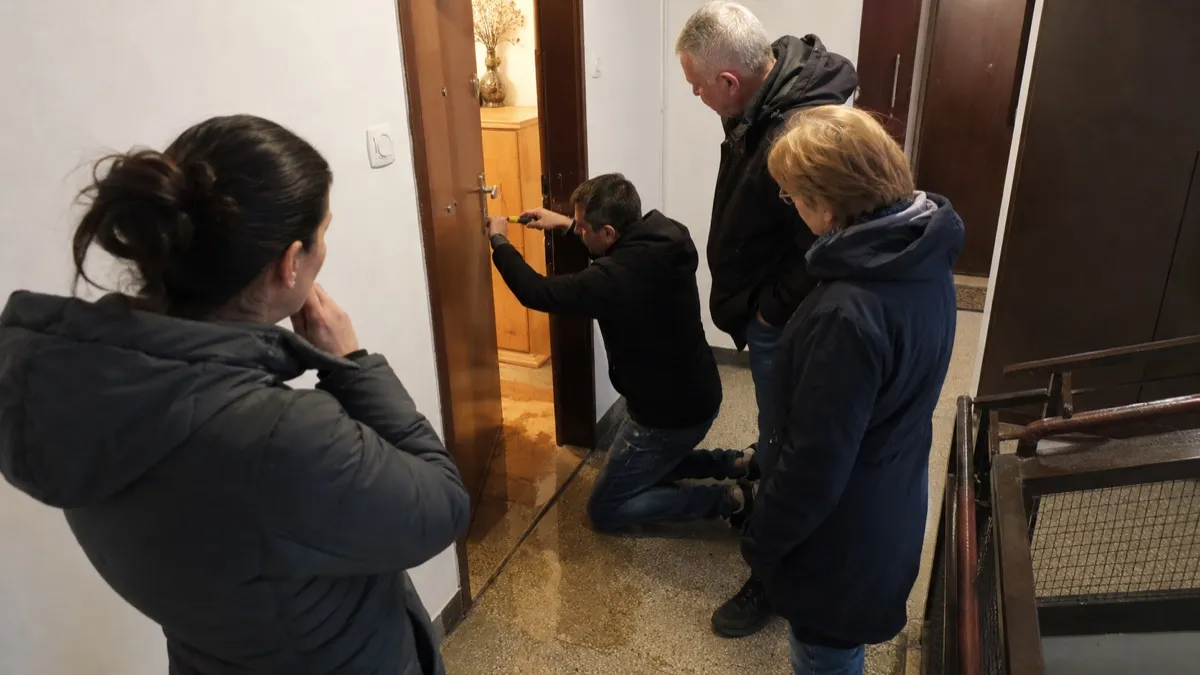
It was impossible to get inside and assess the damage — short of drilling the locks open. While Anna was working out what to do, the neighbours, the building manager, and the people at fault from above gathered in the stairwell. The apartment stayed locked, with water inside for who knows how long.
In the end, Anna found us online while searching for someone who could help in Ljubljana. We went out.
We drilled the locks open. We called an emergency locksmith, got inside, recorded the damage — photos, video, a list of what was affected. Anna had all of it an hour after the call. The apartment was no longer a “black box.”
We fitted new locks. After being drilled, the old locks had to be replaced. We did it the same day — the apartment was secure again, with the keys held by us.
We took the repair in hand. The neighbours at fault were obliged to compensate the damage and carry out the repair. That sounds simple, but in practice it requires a report with the building manager, agreeing the scope of work, overseeing the repair itself, and signing off the result. Anna was in Berlin the whole time — we oversaw the repair on the spot: we came, we checked, we reported on progress.
We sorted out the water debt. While dealing with the building manager, it emerged that Anna’s apartment had an outstanding water debt — the bill had gone unpaid for several months, and the supply had been restricted. Anna had not known. We sorted it out: clarified the amount, passed it to Anna, received payment, and closed the matter. The apartment was in order again on all the paperwork.
Once the repair had been signed off and the apartment put right, Anna put it like this: “I don’t want the next time to start again with no one being able to get inside.”
We agreed on this: the keys stay with us — key holding with a contract. Once every two months, a scheduled visit: an inspection, meter readings, collecting the post. We left our phone number with the building manager and with the neighbours on the floor — so that next time the first call goes straight to us, not to Anna in Berlin.
No more “locked, no idea what’s inside” situations. If something happens, we are already inside or can get in within the hour.
“I don’t leave keys anywhere” is not security — it is a risk. When something urgent happens, the absence of a key on the spot turns any problem into a crisis. Drilled locks, lost time, no ability to act fast.
A remote owner does not see what is happening at their home. Utility debt, accumulated post, restricted services — all of this can exist for months and only come to light during a chance check or at the moment of a crisis.
Overseeing a repair requires presence. When someone else is doing a repair in your apartment, without a real representative on the spot you never know what is actually going on.
Key holding is not about trust — it is about response. Keys with a service mean that, at any moment, someone competent can get in, assess, decide, and act. That is the foundation of calm remote ownership.
Anna’s story is typical for remote owners of city apartments. We cover exactly this scenario: key holding with a contract and a fast response, scheduled visits with an inspection and meter readings, One-off Visits for specific tasks, and oversight of repair work on your behalf. We work in Ljubljana and other cities across Slovenia.
The easiest way to start: write to us via the form or on WhatsApp. The first inspection is free.
Is this the real story of a specific client? This is a composite story based on typical situations of remote apartment owners. The name and details are notional, but situations like this are not rare.
What do you do if neighbours flood your apartment while you are abroad? The first step is getting inside. Without a key on the spot, that means calling an emergency locksmith. Then come recording the damage, dealing with the building manager, and overseeing the repair the people at fault are obliged to carry out. All of this can be delegated to a local representative — which is exactly what we do.
Why is it better to leave keys with a service rather than a neighbour? A neighbour can help once, but bears no responsibility and does not know whom to call in an unusual situation. A service holds the keys under a contract, responds to any situation, has a circle of trusted contractors, and acts without your involvement — you simply receive a report.
What does the scheduled visit every two months include? A checklist inspection, meter readings, collecting the post, a photo report. If something is noticed, we tell you straight away. If a decision is needed, we agree it with you or act within the contract.
How do you find out about problems if you don’t live in the building? We leave our contact with the building manager and with the neighbours. When something happens, they call us, not you. You receive the information already with a ready plan of action.
Anna’s story begins with a pipe that burst at the neighbours’. But the real problem came earlier — in the fact that the apartment stood with no representative whatsoever on the spot. Drilled locks, a water debt, an unsupervised repair — all of it was a consequence of one decision: “I don’t leave keys anywhere.”
By changing that one decision, Anna got a different kind of ownership: manageable, predictable, with no background anxiety.
If you recognise your own situation in Anna’s story — write to us.
A composite heir's story about receiving his parents' apartment in Slovenia while living abroad: the path from being overwhelmed to a calm decision about the property.
A composite story of an owner: an apartment on the Slovenian Coast used as a short-term rental — the first season managed alone, and what operational support changed.
A composite story of an Austrian couple who bought a house in Portorož. A storm, a neighbour with a key, a subscription and years of working together — what long-term care of a country house looks like.
Tell us about your situation — we'll agree on the format and a fixed price. The first assessment visit is free.