DomCare's 4 Service Areas — and Why We Chose Them
Why DomCare works in four areas of Slovenia — Ljubljana, the Coast, Bled and Bohinj, and Kranj — and why limiting our geography works in the client's favour.
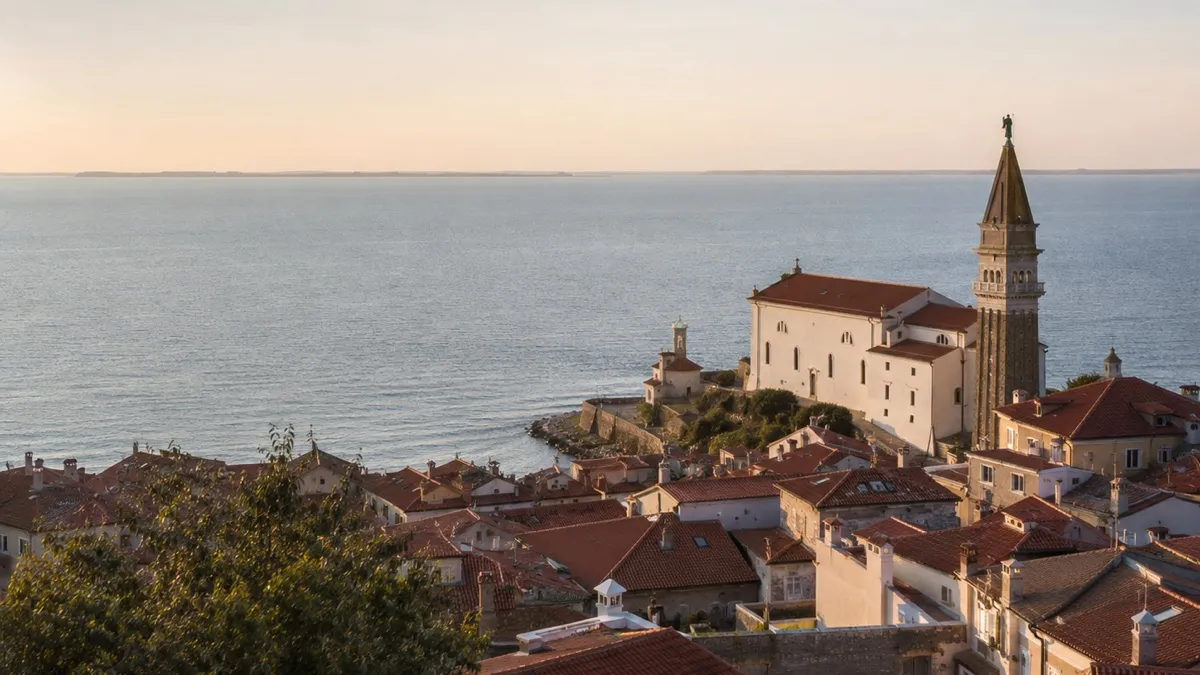
Slovenia has only about 47 kilometres of sea coast — but it’s one of the most sought-after places in the country to buy property. The sea, a Mediterranean character, tourist demand. For a property owner, the coast is both an attractive asset and a property with its own upkeep profile.
This article is a guide to the Slovenian Coast through an owner’s eyes: how the four main towns differ, what owning here involves, and how the coastal climate affects looking after a property.
It draws on Slovenian practice, tourism data from SURS, and years of experience from the DomCare team maintaining properties on the coast.
The coast is compact: four main towns along a short stretch, with small distances between them. This is historic Istria, with a Venetian heritage, a Mediterranean climate, and a pronounced tourist seasonality.
For an owner, that means two things. First: the coast is a seasonal destination, busy roughly from April to October, with a quiet off-season (there’s a separate article on this). Second: the coastal climate is its own upkeep factor — one you don’t have in Ljubljana or Bled.
Piran. The jewel of the coast — a medieval town on a headland, Venetian architecture, a pedestrian historic core. Properties here are mostly older buildings, atmospheric and in demand, but with their own quirks: narrow streets, restricted vehicle access, the age of the buildings, heritage-protected status. High tourist demand.
Portorož. A resort town next to Piran — hotels, beaches, a promenade, more modern construction including apartment complexes. A “resort” feel, with a strong orientation toward tourism and renting.
Izola. A former fishing town — quieter, more authentic, less touristy than Piran or Portorož. A mix of an old core and residential building. Often the choice of those who want the coast “to live in,” not just to holiday in.
Koper. The largest town on the coast and a significant port — a full-fledged town rather than a resort: year-round life, infrastructure, a steadier, not purely seasonal rhythm. There’s more “urban” ownership here, closer in character to Ljubljana.
Choosing between them is choosing a character: Piran — atmosphere and older buildings, Portorož — a resort and renting, Izola — calm, Koper — year-round town life.
Older buildings in the historic cores. Especially in Piran: houses of a venerable age, heritage-protected status, restrictions on changes, particular building systems. Maintaining such a property calls for attention to the building’s age.
Seasonality. Most coastal properties are either rented out in season or used by owners over the summer. That sets the rhythm: a busy season from April to October and an off-season, each period with its own tasks.
Houses with grounds. The coast has not only apartments but houses with gardens, terraces, sometimes pools. That adds garden and outdoor care and seasonal tasks to the upkeep.
Logistics. The coast is further from the airport than Ljubljana. For a remote owner that means: dropping by on a whim is harder, and the role of local oversight is greater.
The coastal climate is the key factor in maintaining a coastal property, and it works differently from the continental one.
The bora (burja). A strong, gusty wind — a constant factor, especially in the cold season. The bora stresses the roof, tears off poorly fixed elements, damages shutters. After strong episodes the property needs to be checked.
Salt air. Sea air is a corrosive environment. It accelerates wear on metal, fittings, seals, and air conditioners, and leaves a film on façades and glass. It’s continuous background wear.
Humidity. High coastal humidity means a risk of damp and mould, especially in an empty, unaired house during the off-season.
A mild winter. On the upside, deep frosts are rare, and the risk of frozen pipes is lower than in continental Slovenia.
The takeaway: a coastal property is prepared not “for frost” but for wind, salt, and moisture. In detail — in the article on the off-season of a coastal home.
The coast is a natural place for short-term rental: tourist demand here is high in season. But that’s exactly why it’s worth understanding the seasonal nature of this income — a summer peak, winter quiet — and sorting out the rules in advance (the property’s status, registering the activity — that’s a question for a lawyer). On the coast’s rental season there’s a separate article; on the operational side — short-term rental support.
The coast is a good choice if you: want a property “by the sea” for holidays and seasonal use; are considering income from seasonal short-term rental; are ready to factor the coastal climate into upkeep; value a Mediterranean character. Koper additionally suits those who need year-round town life rather than resort seasonality.
The main thing to accept in advance: a coastal property calls for more attentive upkeep than a Ljubljana apartment — because of the climate, the seasonality, and often the older buildings. That’s not a drawback but a characteristic to build into the plan.
The coast is one of our four working areas. Property Care on the coast is run with local specifics in mind: checks after the bora, attention to salt wear, fighting damp in the off-season, seasonal cycles. Short-term rental support is for rented-out properties. Garden and outdoor care is for houses with grounds. We work across the whole coast — Piran, Portorož, Izola, Koper. The first property visit is free.
The easiest way to talk it through: message us through the form or on WhatsApp.
How do the towns of the Slovenian Coast differ? Piran — atmospheric older buildings and high tourist demand; Portorož — a resort with modern construction and an orientation toward renting; Izola — a quieter town “to live in”; Koper — a full-fledged town with a year-round rhythm.
Is a coastal property harder to maintain than one in Ljubljana? Yes, somewhat harder: the coastal climate (bora, salt, humidity), seasonality, and often older buildings call for more attentive upkeep. The upside is a milder winter and a lower risk of frozen pipes.
What matters most in maintaining a coastal property? Protection from the bora, controlling salt wear, and fighting damp, especially in the off-season. A coastal home should be prepared for wind and moisture, not for frost.
Is the coast a good place to rent out property? Tourist demand in season is high, but it’s distinctly seasonal — a summer peak, winter quiet. That needs to be built into your income calculation. Check the legal side of renting with a lawyer.
Which coastal town should I choose? It’s a choice of character: Piran — atmosphere, Portorož — a resort and renting, Izola — calm, Koper — year-round town life. For upkeep, the age and type of the property also matter.
The Slovenian Coast is compact but varied: four towns with different characters along a short stretch by the sea. It’s an appealing place to own, but a property here calls for attention to the coastal climate, seasonality, and often the building’s age. Understanding these specifics is the basis for owning a seaside property with peace of mind.
Own a property on the Slovenian Coast — message us, and we’ll explain how to set up care with the local specifics in mind.
Why DomCare works in four areas of Slovenia — Ljubljana, the Coast, Bled and Bohinj, and Kranj — and why limiting our geography works in the client's favour.
An overview of Kranj and the Gorenjska region for a property owner: how the region differs from Ljubljana and Bled, and the specifics of owning and maintaining a property here.
An overview of Slovenia's Alpine region for property owners: how Bled and Bohinj differ, what is specific to a mountain home, the climate and the double seasonality.
Tell us about your situation — we'll agree on the format and a fixed price. The first assessment visit is free.