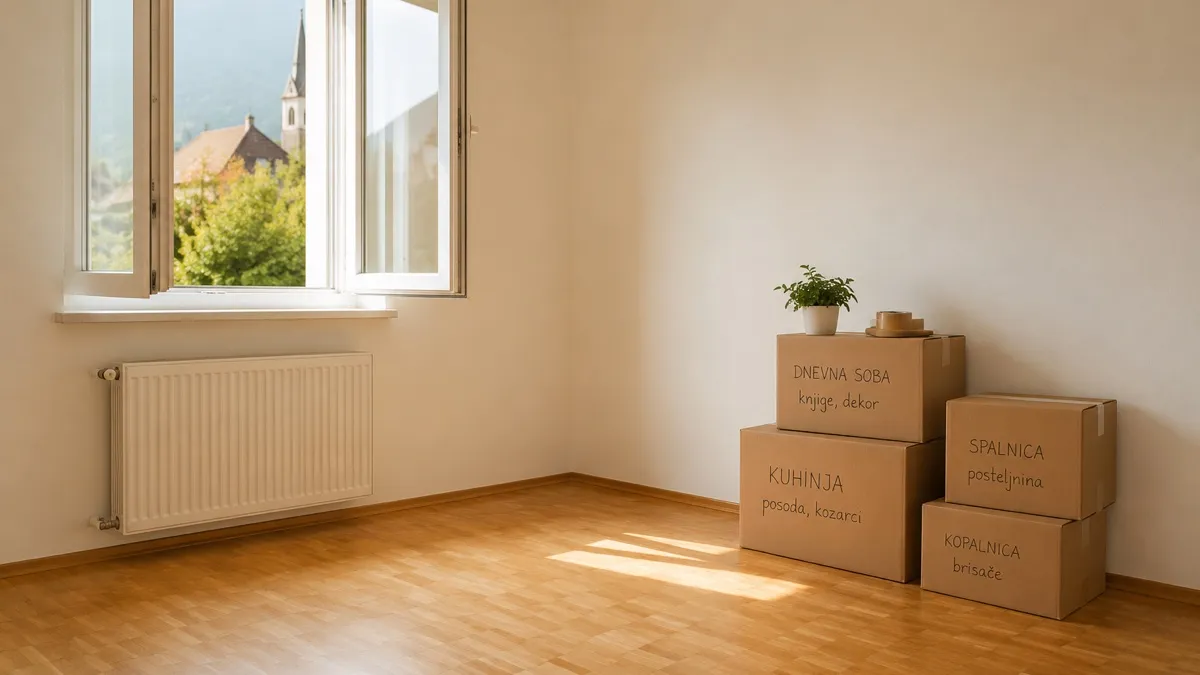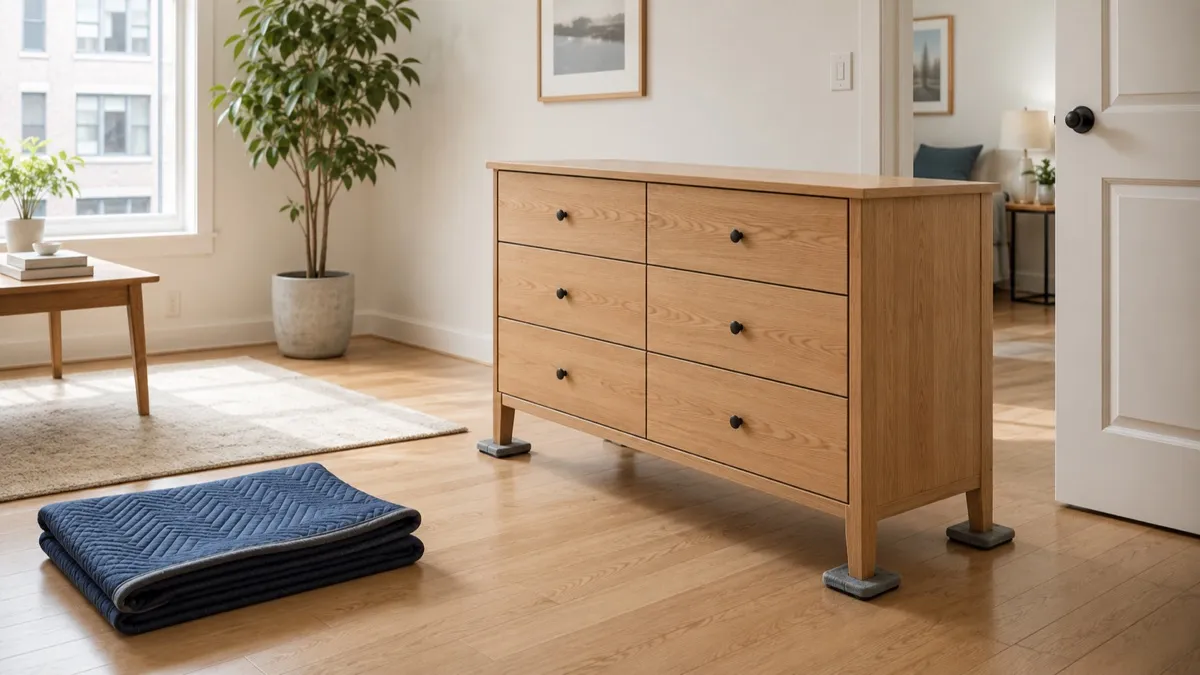
Moving Furniture Within a Property: 6 Situations When You Need It
What moving furniture within an apartment or house in Slovenia means: the 6 situations when you need it, what the service covers, and how it differs from a full move.
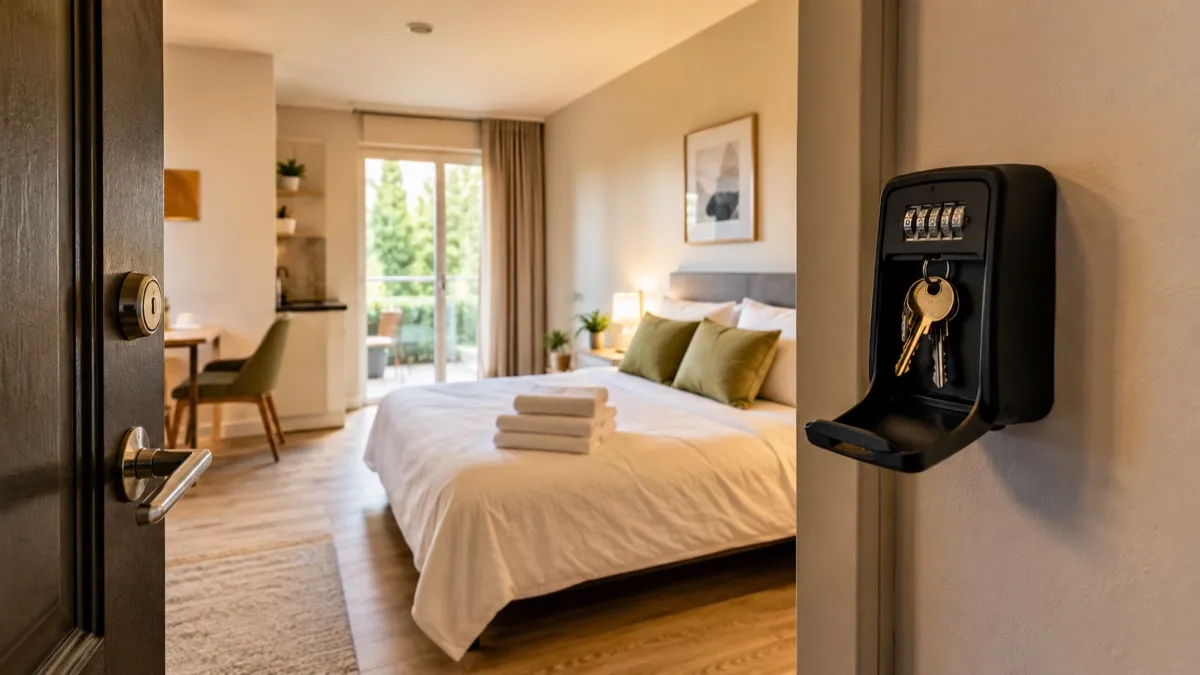
Short-term rental looks calm right up until the moment everything goes to plan. Problems arise at specific, recognisable moments — and almost always at the wrong time: on a weekend evening, on a guest changeover day, when the owner is in another country and another time zone.
This article is about five such points. These are situations where operational short-term rental support genuinely saves the owner: from a bad review, a lost booking, a guest refund, and accumulated damage. If you rent out an apartment remotely, or are only thinking about it, look at these five scenarios honestly and ask yourself who will solve each one.
It draws on the practice of short-term rental operators, tourism data from SURS, and years of experience from the DomCare team providing operational support for rental properties in Slovenia.
First, it’s important to draw the line. Short-term rental support is the operational physical layer of your rental. Not managing the listing, not talking to guests in your place, not pricing — those you handle yourself or hand to an operator. Support is people on the ground who do what physically can’t be done from another country: open the door, fix things, clean, react, sort it out.
The owner stays the host of the rental and its income. Support bridges the gap between “I take a booking from Berlin” and “a guest is standing at the door in Ljubljana.” Below are the five points where that gap is felt most.
The most common and the most galling situation. The guest has flown in, got to the apartment — and can’t get inside. The code didn’t work, the lock jammed, the guest mixed up the address, the flight was delayed and they arrived at midnight instead of midday.
For the guest, it’s the worst possible first impression. For the owner, it’s an almost guaranteed bad review, and sometimes a refund. And all of it happens while you’re asleep in another time zone or sitting on a plane.
What support changes. On the ground there’s a person with a spare set of keys and a contact the guest can call right now. The code didn’t work — they’ll come and open up. The guest is lost — they’ll point them in the right direction. A problem that, without support, turns into a ruined evening, with support is solved with a single call. The spare set of keys is kept in a secure place — this connects to the key holding service.
The guest is inside — and calls: no hot water, the coffee machine won’t work, the air conditioner has stopped turning on, the tap is leaking. Appliances in a short-term rental wear out fast, and breakdowns happen exactly at the moment of use — that is, with a guest in residence.
Without a person on the ground, the owner has two bad options: apologise and promise to “sort it out” (the guest writes that into the review) or scramble for a tradesperson willing to come today, to an unfamiliar property.
What support changes. There’s someone to come and assess: some breakdowns are fixed on the spot through repairs and handyman work, some with a quick call-out to a trusted contractor. The guest sees that the problem was dealt with quickly — and that often turns a potential negative into a neutral or even positive review (“something broke, but it was fixed the same day”).
The classic changeover-day trap: one guest checks out at 11:00, another checks in at 15:00. Between them — a full cleaning cycle and a linen change. If the cleaning falls through — someone is ill, the previous guest stayed late, a scheduling clash — the next guest walks into an uncleaned apartment.
That’s an instant and heavy hit to the property’s reputation. One such case can ruin a rating built up over months.
What support changes. Cleaning runs on the booking schedule, not “whenever it works out,” and the system has slack built in for clashes. Support makes sure that, between guests, the property always goes through a full cycle — cleaning for short-term rental accounts for exactly this strict time logic. If the previous guest stayed late, support reshuffles the schedule rather than leaving the next guest without a cleaned apartment.
Not all problems are technical. The guest is noisy and the neighbours complain. The guest arrived with more people than they booked for. The guest damaged something and didn’t report it. The guest demands a refund, threatening a bad review.
From another country, situations like these are almost unmanageable: you can’t see what’s really happening, can’t assess the damage, can’t talk face to face.
What support changes. It becomes possible to physically check and be present. A neighbours’ complaint — support can come and assess whether there really is a problem. A suspected damage — record the property’s current condition with photos. A dispute over the apartment’s condition at checkout — document it. This moves the conflict from “one word against another” into the realm of facts, and facts are your protection both in dealing with the platform and in withholding a deposit.
And, separately, genuine emergencies: a burst pipe, a leak to the neighbours, a triggered alarm, a smell of gas, a loss of power or heating with a guest in residence.
This is at once a threat to the property and to the guest. It needs an immediate response, and managing it by phone from another country, without seeing the situation, is nearly impossible.
What support changes. A person quickly heads to the property, takes the first measures — shutting off the water, cutting the power in the affected zone, helping the guest with temporary accommodation if needed — and agrees the next steps with you. The goal is the same as in any emergency: don’t let the damage grow. The difference is that in a short-term rental there’s also a guest inside, whose impression and safety are on the line too.
So that expectations are honest. Short-term rental support is an operational layer, and it does NOT do:
Support begins where physical presence on the ground is needed. Many owners combine: they run the commercial part themselves or through an operator, and hand the physical part to local support. That’s a normal, workable arrangement — the key is to divide the zones clearly in advance.
At DomCare, short-term rental support is exactly the closing of these five points: guest access, response to breakdowns, oversight of cleaning on schedule, physical checks in non-standard situations, a call-out for emergencies. Around it are related services: cleaning on the logic of bookings, key holding, repairs and handyman work.
You stay the owner of your rental and its income. We take on what can’t be done from another country. We work in Ljubljana, on the Slovenian Coast, in the Bled and Bohinj region, and in the Kranj region.
The easiest way to talk it through: message us through the form or on WhatsApp.
How does support differ from a short-term rental operator? An operator takes the whole cycle, including the listing, prices, and guest communication, for a percentage of revenue. Support covers only the physical operational part — access, breakdowns, cleaning, response — while you run the commercial side yourself. Support is usually cheaper and leaves you more control and income.
Can I use support if I rent through an operator? Yes, this combination does occur: the operator runs the commercial side and the guests, local support handles the physical tasks. The key is to divide the zones in advance so there’s no duplication or gaps.
Do I need support if I rent out just one apartment? Especially if it’s one apartment and managed remotely. It’s precisely the owner of a single property who has no “cushion” of staff — and the five points described arise regardless of how many apartments you have.
What about cleaning when guests change on the same day? That’s exactly the main reason cleaning for short-term rental is planned on the booking schedule and with slack for clashes. Support makes sure a changeover day doesn’t leave the next guest without a cleaned apartment.
Does support respond at night and on weekends? Check-ins, breakdowns, and emergencies happen precisely in the evenings and on weekends. The specific arrangement and response times are agreed when the contract is signed and depend on the property’s region.
A short-term rental doesn’t break down “in general” — it breaks down at five specific points: guest access, a breakdown with a guest in residence, a failed cleaning on changeover day, a conflict with a guest, an emergency. If, for each of these scenarios, you have an answer to “who will solve this” — the rental is manageable. If you have no answer for even one — that’s a future bad review.
Want to walk through your situation across these five points — message us, and we’ll see where your rental has gaps.
What moving furniture within an apartment or house in Slovenia means: the 6 situations when you need it, what the service covers, and how it differs from a full move.
What property clearing in Slovenia is, how the process works, the situations where it's needed, and how to approach clearing an inherited home with care.
A closed-up apartment is in a state of dormancy. How to properly start up a home after a long absence and shut it down sensibly when you leave — without smells or breakdowns.
Tell us about your situation — we'll agree on the format and a fixed price. The first assessment visit is free.