When to clean your mattress: signs, timing, dust mites
How to tell your mattress needs cleaning, why dust mites live in the mattress, what timing to treat as normal, and what actually helps with allergies.
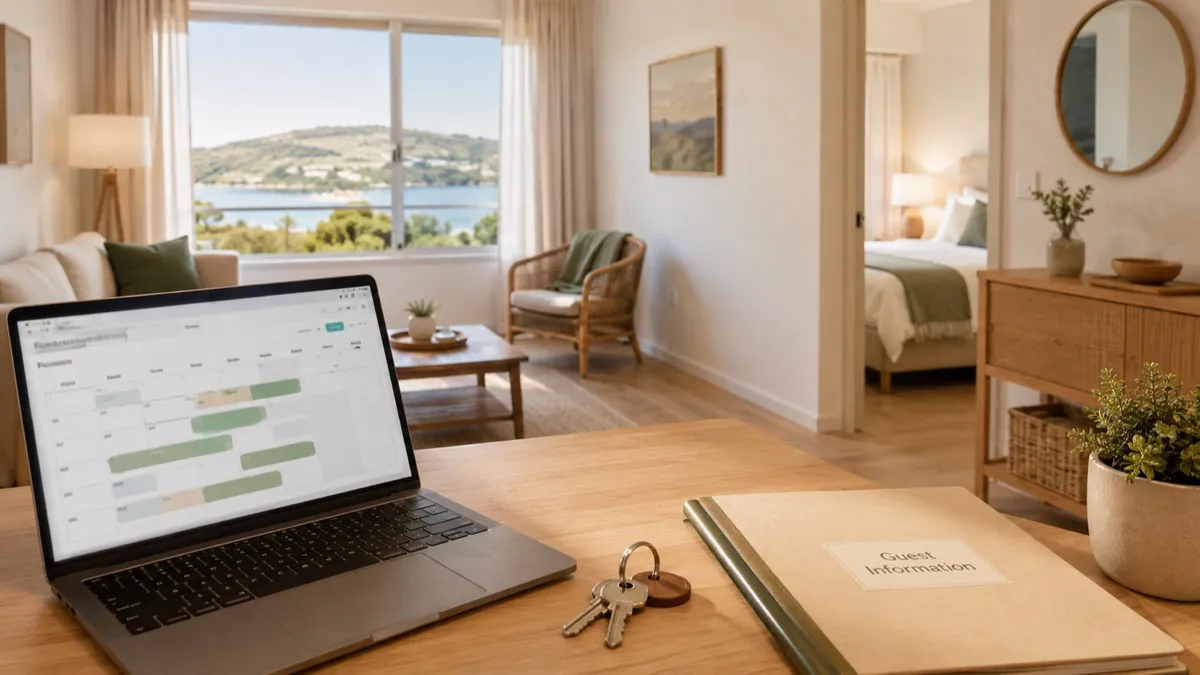
Short-term rental — letting a property by the night to tourists — looks appealing: the income is higher than with long-term rental, and the property stays available to you whenever you want it. But behind the “passive income” facade sits a genuinely active business, with cleaning, guests, breakdowns and seasonal cycles.
This article is a practical map for an owner considering short-term rental of their property in Slovenia: what to do before launching, what the operational routine actually looks like, whether you can run it remotely, and where newcomers most often go wrong.
One thing up front: this article contains no legal or tax advice. Registering the activity, the tourist tax, reporting, taxing the income — that is a separate area you settle with a Slovenian lawyer (advokat) and accountant (računovodja). Here we talk about the operational, practical side.
This material draws on Slovenian housing legislation (Stanovanjski zakon, the Slovenian Housing Act), tourism data from the Statistical Office of the Republic of Slovenia (SURS), and the many years of experience the DomCare team has in providing operational support for short-term rental properties.
Before diving into the details, compare the two paths honestly.
Long-term rental means one tenant for a year or more. The income is lower and fixed, but so is the workload: one contract, one deposit, minimal operational routine. The property is occupied — you don’t use it.
Short-term rental means a flow of guests, each staying a few nights. The potential income in high season is noticeably higher, and the property stays available to you between bookings. But it is also constant work: cleaning after every guest, communication, check-ins, responding to problems, managing prices and the calendar.
Short-term rental makes sense if: the property is in a location that attracts tourists (Ljubljana, the coast, Bled), you are ready either to handle the operations yourself or to pay for them to be organised, and local rules allow this format for your property. If even one of those conditions isn’t met, long-term rental may turn out to be the better deal in terms of “income per unit of stress”.
Short-term rental in Slovenia is regulated, and you do need to approach it formally. Without going into the detail (that is work for specialists), you will at least need to get clear on a few things: whether your property is allowed to be used for short-term rental (this depends on the property type and the building’s rules), how such an activity is registered, how the tourist tax and guest registration work, and how the income is declared.
Each of these questions is best settled with a professional: a lawyer for the property’s status and registering the activity, an accountant for taxes and reporting. This is not an area where you should act on forum advice. A mistake in registration or reporting costs more than a consultation.
It is also worth checking your building’s rules separately. In apartment buildings, short-term rental is sometimes restricted by a decision of the owners’ assembly (zbor etažnih lastnikov — the assembly of co-owners). You need to find this out before you invest in equipping the apartment.
We will cover this topic in detail in separate articles with input from specialist lawyers — for now, let’s focus on the operational side, where we have direct, hands-on experience.
Once the legal side is clear, preparing the property itself begins.
Equip it for a guest, not for yourself. Short-term rental needs a “hotel” set: enough bed linen and towels (at least two sets per sleeping place, so one can be in the wash), basic kitchenware and appliances, a hairdryer, an iron, a cleaning kit. A guest should never run into a shortage of the basics.
Reliability over designer flourishes. In short-term rental, things wear out fast. Simple, sturdy furniture and appliances of well-known brands beat fragile design. Every breakdown in season is a lost night and a bad review.
Safety and basic infrastructure. Working smoke detectors, a fire extinguisher, a first-aid kit, clear instructions for the equipment. Reliable internet — these days that is not optional, it is a requirement.
Good photos and an honest description. A listing sells the first impression. Professional photos pay off. The description must be honest: inflated expectations turn into bad reviews.
A thought-through access plan. How does the guest get inside? A code lock, a key safe, a personal meeting? There is a separate section on this below.
Here is what really sits behind “passive income” in the active season:
Each item is small. Together, in high season, they add up to 10–15 hours a week — and a significant share requires physically being present in Slovenia.
This is the operational heart of short-term rental. Cleaning between guests is not “dusting” — it is a full cycle: changing bed linen and towels, cleaning the bathroom and kitchen, checking kitchenware and appliances, restocking consumables, inspecting for damage and forgotten items.
The critical factor is time. Often there are only a few hours between one guest’s departure (say, by 11:00) and the next guest’s arrival (say, from 15:00). The full cycle has to fit into that window. That requires either your presence or a smooth process with cleaning scheduled around the bookings. We have a dedicated service for how cleaning works for short-term rentals.
How the guest gets into the apartment is one of the key questions.
A personal meeting is the warmest option — the guest gets an in-person briefing right away. But it requires someone to be on site at the moment of arrival, and arrivals can be late in the evening.
A code lock or key safe lets the guest check themselves in with a code. Convenient and scalable, but it removes the personal contact and requires clear instructions.
Handover via a local person or service is the compromise: it isn’t the owner who meets the guest, but a trusted person on the ground.
In any case, you need a spare set of keys in a secure place — in case a guest loses a key or the code doesn’t work. This is where the Key Holding service helps: the key is always in Slovenia, and access can be opened even when you are in another country.
There are three models for managing a short-term rental:
Fully solo. You run everything: the listing, prices, guests, organising the cleaning. Maximum income, maximum involvement. Realistic if you live in Slovenia or nearby.
Through a short-term rental operator. A management company takes the whole cycle off your hands for a percentage of revenue (on the market this is usually 15–25%). Minimum hassle, but lower income and less control.
Solo with operational support. You run the commercial side (the listing, prices, communication), and hand the physical side — cleaning, keys, responding to problems — to a local service. A balance between income and workload. This is exactly the niche of the Rental Support service.
The choice depends on where you live, how much time you are ready to invest and how much control matters to you.
Slovenian tourism is noticeably seasonal, and that affects everything.
The Slovenian Coast (Piran, Portorož, Izola, Koper) — peaks from June to September, with the off-season running from late autumn to spring. Demand in winter is low.
Bled, Bohinj and the mountains — two peaks: summer (hiking, lakes) and winter (skiing). The off-season is April–May and October–November.
Ljubljana — the most even demand: tourism year-round plus business trips, conferences and events. The dips are shallower.
Seasonality means you cannot calculate annual income as “nightly rate × 365”. Realistic occupancy, a built-in off-season gap and seasonal costs are an essential part of the calculation. We will devote a separate article to the economics of rental.
Underestimating the operational load. “Passive income” is a marketing phrase. Short-term rental is active work.
Launching without checking the rules. Investing in equipment and then finding out the building bans nightly rentals is an expensive mistake. Check the property’s status first.
Cutting corners on cleaning. Bad cleaning = bad reviews = a drop in bookings. Cleaning is an investment, not a line item to trim.
No plan for emergencies. The boiler breaks on a Saturday with guests inside. If you have no one to respond, that is a bad review and possibly a refund.
Calculating income off the high season. You have to do the maths across the year, including the off-season — not off a July nightly rate.
Managing remotely without a local person. Some tasks are physically impossible to do from another country.
DomCare does not handle the commercial side of rental — we don’t run listings or communicate with guests in your place. Our area is operational, physical support, without which remote short-term rental simply doesn’t work:
You stay the owner of your rental and its income — we take on what cannot be done from another country. We work in Ljubljana, on the Slovenian Coast, in the Bled and Bohinj region and in the Kranj region.
The simplest way to discuss it: write to us through the form or on WhatsApp.
Is short-term rental more profitable than long-term? In high season and in a tourist location — potentially yes, but only if you have accounted for operational costs (cleaning, consumables, support) and off-season gaps. If you do the maths honestly across the year, the difference is smaller than the nightly rate suggests.
Can you run a short-term rental while living abroad? The commercial side (the listing, prices, correspondence) — yes. The physical side (cleaning, keys, responding to problems) — no, you can’t do without a local person or a service.
Do you need to register a short-term rental in Slovenia? Yes, it is a regulated activity. The specific requirements depend on the property and the format — that is a question for a lawyer and an accountant. Don’t rely on forum advice.
What do you do if your building bans nightly rentals? You need to check this before investing. If the building restricts short-term rental by a decision of the residents, the options left are long-term rental or another use for the property.
How much time does managing a short-term rental take? In high season, doing everything yourself — roughly 10–15 hours a week. With operational support and an operator, that figure drops substantially, but the income is distributed differently too.
What matters most for good reviews? An honest description (no inflated expectations), flawless cleaning and a fast response to problems. Those three things drive the rating more than the interior does.
Short-term rental in Slovenia can be a good decision — but only if you approach it as a small business, not as “passive income”. Sort out the legal side with professionals, assess the operational load honestly, choose a fitting management model — and then the rental will bring income rather than stress.
If you want to discuss operational support for your property — write to us, and we’ll tell you what you would actually need in your case.
How to tell your mattress needs cleaning, why dust mites live in the mattress, what timing to treat as normal, and what actually helps with allergies.
Aeration, scarification, mulching, feeding, liming, overseeding — what these lawn jobs are in Slovenia, why they matter, and how to do each one properly.
How to work out what makes more sense for your property in Slovenia — a Property Care subscription or one-off visits as tasks arise. The logic of the break-even point and what to compare beyond money.
Tell us about your situation — we'll agree on the format and a fixed price. The first assessment visit is free.