When to clean your mattress: signs, timing, dust mites
How to tell your mattress needs cleaning, why dust mites live in the mattress, what timing to treat as normal, and what actually helps with allergies.
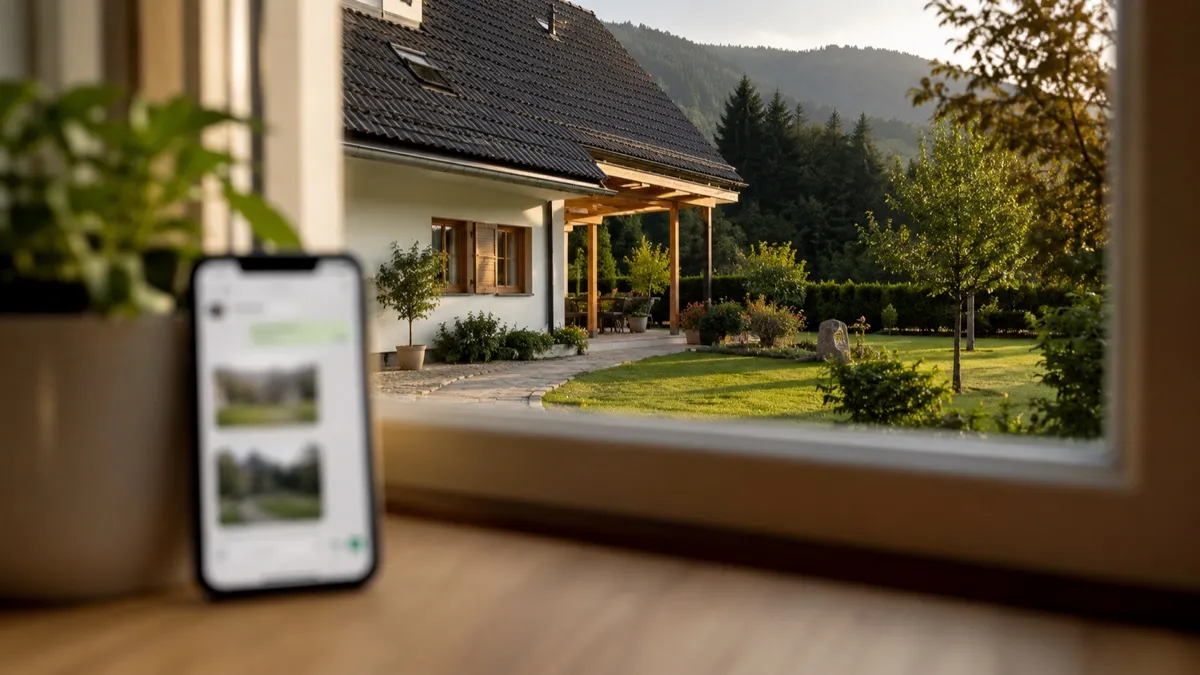
Buying an apartment in Ljubljana or a house on the coast is a relatively straightforward procedure. The difficulties start after the deal closes, when you head back to Berlin, Moscow, London or Tel Aviv, and the property is left empty while you are away. Who pays the utility bills, and where? Who do you call if the neighbours complain about a smell coming from your apartment? What do you do if the boiler service is supposed to come on the 5th and you won’t be back until June? How do you keep up a garden you see once every six months?
This article is a practical map of owning property in Slovenia for those who don’t live in the country full-time. Not about buying (there’s plenty of other material on that), but about what happens to the owner afterwards — operationally, financially and psychologically. Running costs, typical breakdowns, who to call, how to organise it all remotely.
Important up front: there is no tax advice in this article. Property owner taxes in Slovenia and the taxation of rental income are a separate, complex topic that you resolve with a Slovenian accountant (računovodja). Here we cover only the operational side.
The material draws on Slovenian housing law (Stanovanjski zakon, the Slovenian Housing Act), publications by Slovenian building management companies, the recommendations of Eko sklad and the insurer Generali, and years of experience from the DomCare team, which maintains dozens of properties daily for owners living outside Slovenia.
A remote property owner in Slovenia isn’t one single portrait but at least three:
1. The investor. Bought an apartment, or several, as an asset. Maybe you rent it out — long-term or via Airbnb. Maybe you don’t rent it and simply hold it. You’re in Slovenia 0–2 times a year.
2. The future resident. Bought a property “for the future” — to relocate to, for retirement, for the children. You currently live in another country, but in 3–5 years you plan to move. The property sits empty.
3. The second-home owner. A country house, a holiday home, a house on the coast. You’re there 4–8 times a year, usually in the summer or winter season. Between visits the property stands idle.
And three types of property:
A city apartment (Ljubljana, Kranj, Celje, Maribor) — the lowest operational load. There’s common building property (etažna lastnina) but no garden or grounds of your own. The main risks are a leak from the neighbours, a faulty water heater, a theft during a long absence.
A country house with grounds (any region) — a medium-to-high load. Your own yard, garden, sometimes a pool, more complex heating, more wearing elements outdoors.
A house on the coast or in the mountains (Piran, Portorož, Izola, Koper, Bled, Bohinj) — a high load plus climate specifics. Salty air (the coast) or an Alpine winter (the mountains) wears the property out faster than usual. The seasonality of renting adds its own rhythm.
Depending on your combination (type of owner × type of property), the operational complexity varies a lot. An investor’s city apartment in Ljubljana is the simplest situation. A future resident’s house on the coast with a garden is the most complex.
These tasks exist regardless of whether you live there or not. If you live there, you do them yourself. If you don’t, someone has to do them for you.
Every month:
Every quarter:
Every season (spring, autumn):
Once a year:
Occasionally (when needed):
If the list looks long — it really is. One of the main emotional shocks for a new remote owner is realising how many small things need attention every month.
The average cost of keeping up an apartment in Slovenia is around €2,000–2,800/year for utilities and mandatory payments, depending on the region, floor area and the building’s energy efficiency. For houses with grounds it’s 30–60% higher, due to the extra cost of heating a larger area and the cost of the grounds.
The structure of monthly costs for a standard 50–80 m² apartment in Ljubljana:
Additional operating costs many people don’t factor in:
These are all operating costs. Taxes on ownership and rental income are a separate topic for an accountant.
From the practice of maintaining dozens of properties in Slovenia — a ranking of the most common interventions:
1. A burst pipe or water leak (~30% of all emergency call-outs). A burst pipe, an overflowing water heater, a leaking radiator. In an empty house this is a catastrophe: water can run for days before it’s discovered. Who to call: a plumber (vodovodar). In Slovenia good plumbers work by appointment; emergency call-outs exist but cost more.
2. A heating fault (~20%). In winter, the most critical category. A frozen system, a faulty boiler, a miscalibrated thermostat. Who to call: a heating equipment service (serviser ogrevalne naprave) licensed for your type of boiler.
3. Electrics (~15%). A blown component, a meter problem, a power cut. Who to call: an electrician (električar). Emergency call-outs — via your regional electricity supplier (Elektro Ljubljana, Elektro Maribor, Elektro Primorska, Elektro Celje, Elektro Gorenjska — each region has its own).
4. Household appliances (~10%). Washing machine, dishwasher, fridge. If there’s a warranty — an authorised service. If not — a private appliance repair technician.
5. Roof and façade (~10%). After strong storms, hail, snow loads. Who to call: a roofing company (krovsko podjetje) or a façade specialist (fasader). This is handled by a specialist company, not a handyman.
6. Alarm and security systems (~5%). A false trigger, a system fault. Who to call: your security company (Sintal, G7, Varnost).
7. Neighbour complaints and condominium issues (~10%). Noise, smells, breaches of the building rules. Resolved via the owners’ meeting (zbor etažnih lastnikov) and the building manager (upravnik).
If you’re abroad and a neighbour calls, or the alarm goes off, someone on the ground has to assess the situation, let a contractor in, agree the next steps with you. That’s the job of a property care service or a trusted person.
A remote property owner in Slovenia often runs into the fact that they don’t know exactly which specialist to turn to. This map will help:
At DomCare we work as the “connecting link” between you and this network. When a plumber is needed — we call a plumber. When a tax adviser is needed — we recommend a trusted accountant, but we don’t try to advise on it ourselves. On the boundaries of our role — see the separate article “What property care is”.
Scenario 1. An investment apartment in Ljubljana, rented out long-term. Management: paying utilities by bank, a property care subscription to keep an eye on the condition, responding to emergencies. Taxes — once a year via an accountant. Owner’s time: 2–3 hours a month on correspondence with contractors.
Scenario 2. An investment apartment, rented out via Airbnb. Management: a short-term rental operator, or you yourself. Plus — cleaning between guests, key handovers, responding to problems. A property care subscription or working with a local helper. Owner’s time: 5–10 hours a month.
Scenario 3. An apartment “for the future,” sitting empty. Management: the minimum — paying utilities + a monthly check + seasonal preparation. A basic-tier property care subscription covers it fully. Owner’s time: 1 hour a month.
Scenario 4. A country house, a second home. Management: a medium load, especially if there’s a garden. A Standard- or Premium-tier subscription. Seasonal preparation is mandatory. Owner’s time: 2–3 hours a month.
Scenario 5. A house on the coast with short-term rentals. Management: high operational complexity because of the season (April–October) — a constant flow of guests, cleaning, repairs between guests, responding to problems. Owner’s time: 10–15 hours a month in season, 2–3 off-season.
Scenario 6. An inherited house. Management: the first 6–12 months — clearing it out, assessing the condition, decisions about the future (sell / rent / hold). A high operational load, temporarily. After that — a transition to one of scenarios 1–5.
A few practical principles:
1. Automate everything you can. A direct debit for utilities from a bank account (trajni nalog), automatic insurance, automatic reminders for seasonal work. The fewer “manual” transactions, the fewer missed payments.
2. Consolidate communication. One email address for all Slovenian matters. One WhatsApp chat with your property care provider. One cloud folder with all the property’s documents.
3. Have a “trusted person” on the ground. This could be a neighbour, a relative or a specialist service (like us). The main thing is someone who can physically come within 24 hours.
4. Seasonal reminders in the calendar. October — winter preparation. April — opening the season. September — closing the coastal season. December — renewing the insurance. This isn’t a “to-do list” but the rhythm of ownership.
5. Keep a reserve. Financial — 5–10% of annual operating costs as a “cushion” for unforeseen repairs. Informational — copies of all documents in the cloud.
6. A subscription instead of one-off call-outs. If the volume of operational tasks exceeds 4–5 call-outs a year, a property care subscription is usually better value, both financially and psychologically.
At DomCare we specialise specifically in remote ownership — most of our clients live abroad or are only in Slovenia for short periods. The work is built around three formats of need:
Property Care — the core product. Regular visits, responding to emergencies, coordinating contractors, seasonal preparation, photo reports. Three tiers to match the volume of tasks.
Key Holding — a light format for those who don’t need regular visits but want a reliable channel in case of an emergency, and priority for call-outs.
One-off Visit — for a specific task without a subscription. For example, letting a contractor in, doing an inspection before your arrival, clearing out an apartment.
In addition — cleaning, garden care, handyman work, short-term rental support, contractor support.
We work in four zones of Slovenia: Ljubljana, the coast (Piran–Portorož–Izola–Koper), the Bled and Bohinj region, and the Kranj region. The first inspection of a property before a subscription is signed is free.
The easiest way to talk it through: write via the form or on WhatsApp.
Can you own and maintain a property in Slovenia entirely remotely? Technically — yes. In practice — almost impossible without a local helper. Too many small tasks require a physical presence: letting a contractor in, collecting post, responding to emergencies. At a minimum you need one reliable contact in Slovenia (a service, a friend, a neighbour).
How many hours a month does ownership take if you have a property care subscription? For an investment apartment with a long-term tenant and a mid-tier subscription — 2–3 hours a month on correspondence, approvals, documents. Without a subscription — 8–15 hours, with a lot of unpredictability.
What do I do about utility bills if I’m not in Slovenia? The simplest option is a direct debit (trajni nalog) from a Slovenian bank account. If you don’t have an account — payment by bank transfer from your own country. In addition: your property care provider can forward you copies of the bills.
Can I rent an apartment via Airbnb while living abroad? You can, but without a local helper it’s hard. Cleaning between guests, key handovers, responding to problems — that’s work on the ground. Either you take on a short-term rental operator (who’ll take 15–25% of the revenue), or you combine self-managed renting with a short-term rental support subscription.
What does the mandatory chimney inspection involve, and why can’t it be skipped? Once a year the chimney and heating equipment must be inspected by a certified chimney sweep. An uncleaned chimney is a common cause of fires. If a fire occurs, the insurer may refuse to pay out without documentation of a completed inspection.
What do I do if the apartment sits empty and I’m in Slovenia once a year? The ideal scenario for a subscription. The minimum — key holding — gives you a key safety “cushion.” Better — Basic-tier property care with a monthly visit and a photo report.
Remote property ownership in Slovenia isn’t “buy it and forget it.” It’s an operational process with a monthly rhythm, seasonal cycles, regular costs and unpredictable emergencies. Understanding that process is half the success. Well-set-up infrastructure (automated payments, a trusted service on the ground, clear procedures) is the other half.
If you’d like to talk through your specific situation — write to us, we’ll look at the property for free and suggest the optimal format.
How to tell your mattress needs cleaning, why dust mites live in the mattress, what timing to treat as normal, and what actually helps with allergies.
Aeration, scarification, mulching, feeding, liming, overseeding — what these lawn jobs are in Slovenia, why they matter, and how to do each one properly.
How to work out what makes more sense for your property in Slovenia — a Property Care subscription or one-off visits as tasks arise. The logic of the break-even point and what to compare beyond money.
Tell us about your situation — we'll agree on the format and a fixed price. The first assessment visit is free.