A Coastal Home from October to March: Off-Season Without Damage
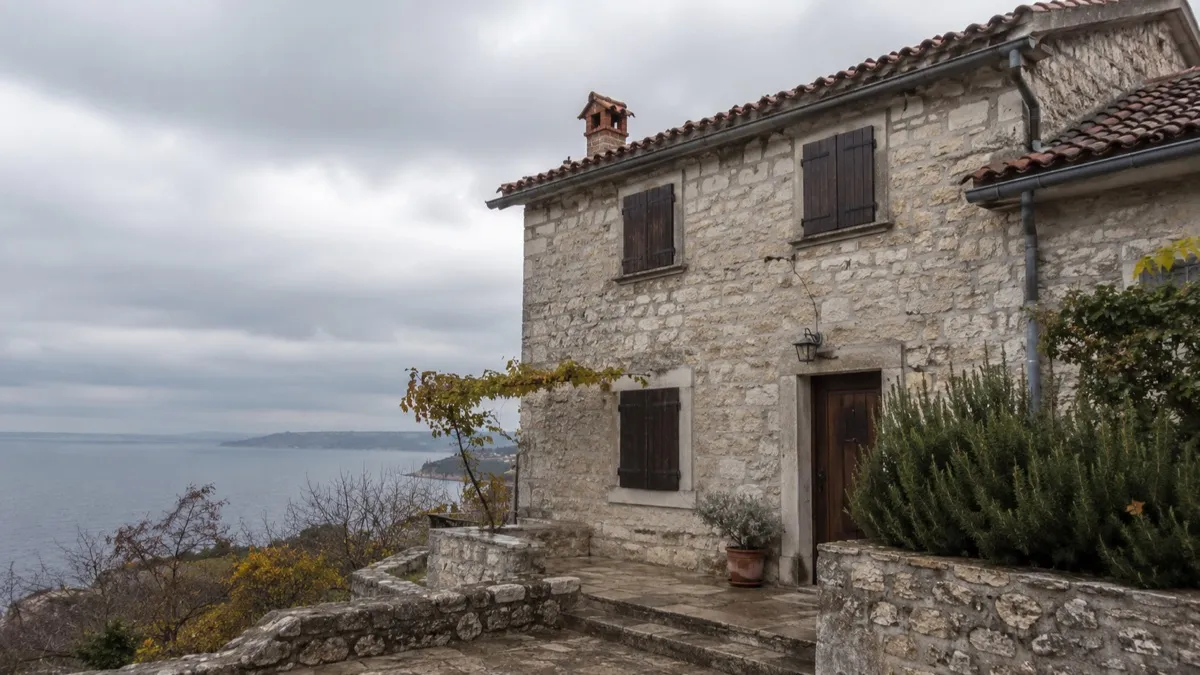
How to prepare a home on the Slovenian Coast for the off-season and get it through unharmed: the risks of the bora wind, salt air and damp from October to March.
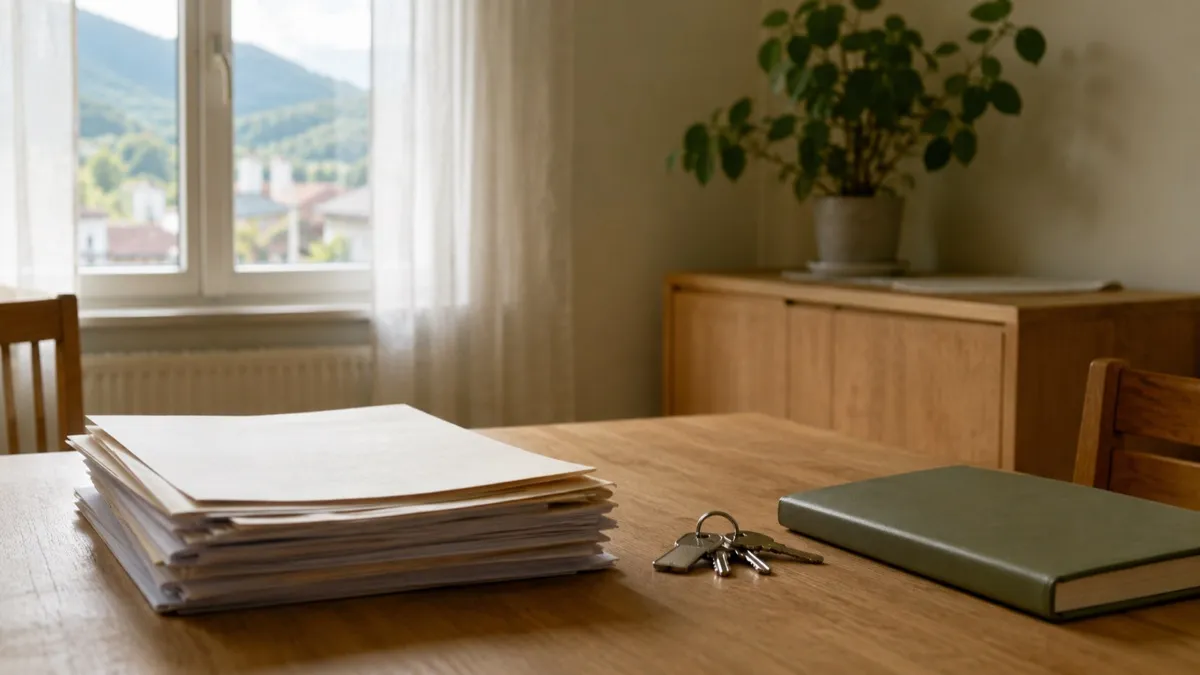
Inheriting property is always a mix of grief, responsibility and confusion. And if the apartment is in Slovenia while you live in another country, a purely practical difficulty is added: what to do with a property a thousand kilometres away, full of a loved one’s belongings, demanding decisions, when you can’t even properly see it.
This article is a calm, practical plan for the first 30 days. Not a legal one (the legal side of inheritance is a separate topic) but an operational one: what to inspect, what to decide, how to clear it out and how to settle on the property’s future.
Important: the legal part of an inheritance — accepting the inheritance, the formalities, the taxes — is the work of a notary (notar), a lawyer (advokat) and an accountant (računovodja). Here we’re talking about the practical side. And one more thing: 30 days is a guideline, not a race. If you need more time, especially emotionally, that’s fine.
This material draws on Slovenian practice and years of experience from the DomCare team supporting owners of inherited property.
Before the plan, let’s acknowledge the starting point. You most likely can’t fly over immediately and deal with the apartment for weeks. You have a job, a family, your own life in another country. Meanwhile the property exists: utility bills run for it, belongings are inside, it needs attention.
The good news: most of the practical tasks of the first month can be handled remotely, step by step, with the help of people on the ground. You don’t need to drop everything and fly. What you need is to act in a structured way.
The first task is to understand what you’ve inherited at all and what state it’s in.
Arrange an inspection of the property. If you can’t come yourself, this is done by a trusted person or a service: a One-off Visit with a detailed inspection and a photo and video report. You need to see: the general state of the apartment, the volume of belongings inside, whether there are any urgent problems (leaks, faults), the condition of the building systems.
Check security and the basic systems. Is the apartment securely locked, are all the keys there, are any pipes leaking, what state are the electrics and heating in. An inherited apartment has sometimes stood unattended for some time — and may have accumulated problems.
Stop the “leaks.” Make sure the utility bills are being paid and no debt is building up. If the apartment is going to stand empty, it makes sense to think straight away about basic Property Care, so the property doesn’t stay unattended while you decide its fate.
Document the state. Detailed photos of the whole apartment at the moment you take it on. This will be useful both for decisions and for a future sale or insurance.
Running in parallel with the practical side is the legal part — and here the main thing is not to try to do it all yourself.
Find a notary and, if needed, a lawyer. Accepting an inheritance in Slovenia is a formalised process. A notary (notar) and a lawyer (advokat) will guide you through it. If the inheritance is complex (several heirs, debts, contested points), a lawyer is especially important.
Bring in an accountant for the tax questions. Taxes connected with inheritance and continued ownership are a question for a računovodja.
Gather the property’s documents. The apartment’s documents, those for the building management, the insurance policy, the utility contracts — all of this needs to be found and put in order.
We’re describing this week deliberately briefly: not because it’s unimportant, but because it isn’t our area. Our one piece of advice — don’t economise on the professionals for the legal part. A mistake here costs more than their fees.
Once the state of the property is clear and the legal part is under way, you can approach the hardest part — the belongings.
Clearing an inherited apartment is not only logistics but also an emotionally difficult process. A few principles that help:
Don’t rush the personal things. Photographs, documents, letters, jewellery, obviously meaningful items — these are set aside separately and passed to you, not sent off for disposal. The decision on them is taken only by you and only when you’re ready.
Sort by category. The rest of the belongings are sorted: to keep for you, to give away or to charity, to dispose of, ordinary removal. For anything doubtful, the decision is yours.
Run the process at your own pace. Clearing can be done in stages, with photo documentation of each step, so that you take part in the decisions remotely. “Clear everything out in a single day” is not a mandatory scenario; if you need it done differently, the process adapts.
After clearing — cleaning. A cleared apartment usually needs a deep clean: under the belongings and furniture lies what hasn’t been cleaned in a long time.
The clearing process is covered in detail in a separate article.
By the end of the first month you have an understanding of the state, the legal part is under way, the apartment is cleared and cleaned. It’s time to think about the property’s future. Usually there are three paths:
Sell. If you don’t need or want to keep an apartment in Slovenia. Then what follows is preparation for the sale, working with an estate agent (posrednik), and here buyer assistance the other way round — from the seller’s side — can come in handy.
Let it. If the property can bring in income. Then ahead lies the decision about long-term or short-term rental and the operational preparation.
Keep it for yourself. For your own occasional use, for the future, for the children. Then the property moves into the mode of ordinary remote ownership — and it needs regular Property Care.
This decision doesn’t have to be made on day 30. It’s often sensible first to put the property under basic Property Care (so it doesn’t sit unattended) and take time for a calm decision.
DomCare covers the practical side of the first 30 days. The initial inspection with a photo report — a One-off Visit. Clearing — carefully, in stages, preserving personal items and documents. Cleaning of the cleared property. Basic Property Care while you make the decision about the future. We don’t handle the legal part of the inheritance, but we work alongside your notary and lawyer, covering everything physical and operational. We work in Ljubljana, on the Slovenian Coast, in the Bled and Bohinj region, and in the Kranj region.
The easiest way to talk it through: send us a message via the form or on WhatsApp.
Do I need to fly to Slovenia urgently if I’ve inherited an apartment there? No. Most of the practical tasks of the first month can be handled remotely and step by step: the inspection, the clearing, basic Property Care — all of it is done with the help of people on the ground.
Where should I start first? With two things in parallel: arrange an inspection of the property (understand its state) and find a notary for the legal side of the inheritance.
How do I clear an apartment full of a relative’s belongings if I’m abroad? Through clearing done in stages, with photo documentation: personal items and documents are set aside separately, and decisions on the rest are agreed with you remotely. You set the pace.
Do I have to decide right away — sell, let or keep? No. This decision doesn’t need to be made on day 30. It’s sensible to put the property under basic Property Care and take time for a calm decision.
Who handles the legal side of the inheritance? A notary (notar), a lawyer (advokat) where needed, and an accountant (računovodja) for the tax questions. This is not an area where you should act on your own.
An inherited apartment in Slovenia is a responsibility that lands at a difficult moment in life. But if you break the first month down into steps — assessment, paperwork, clearing, decision — chaos turns into a manageable process. And almost everything practical can be done without abandoning your life in another country.
If you need practical help with an inherited property — send us a message, and we’ll help calmly and step by step.
How to prepare a home on the Slovenian Coast for the off-season and get it through unharmed: the risks of the bora wind, salt air and damp from October to March.
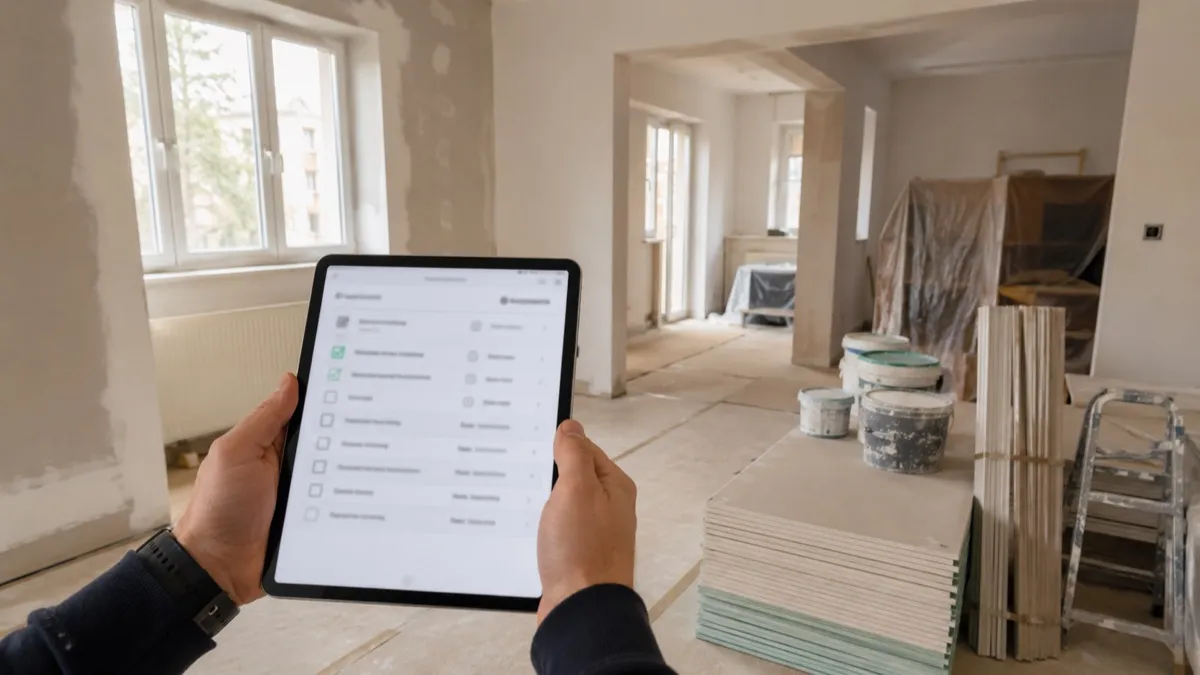
How an owner abroad can keep control of an apartment renovation in Slovenia: what to lock in before the start, the rhythm of oversight, milestone sign-offs and the typical mistakes.
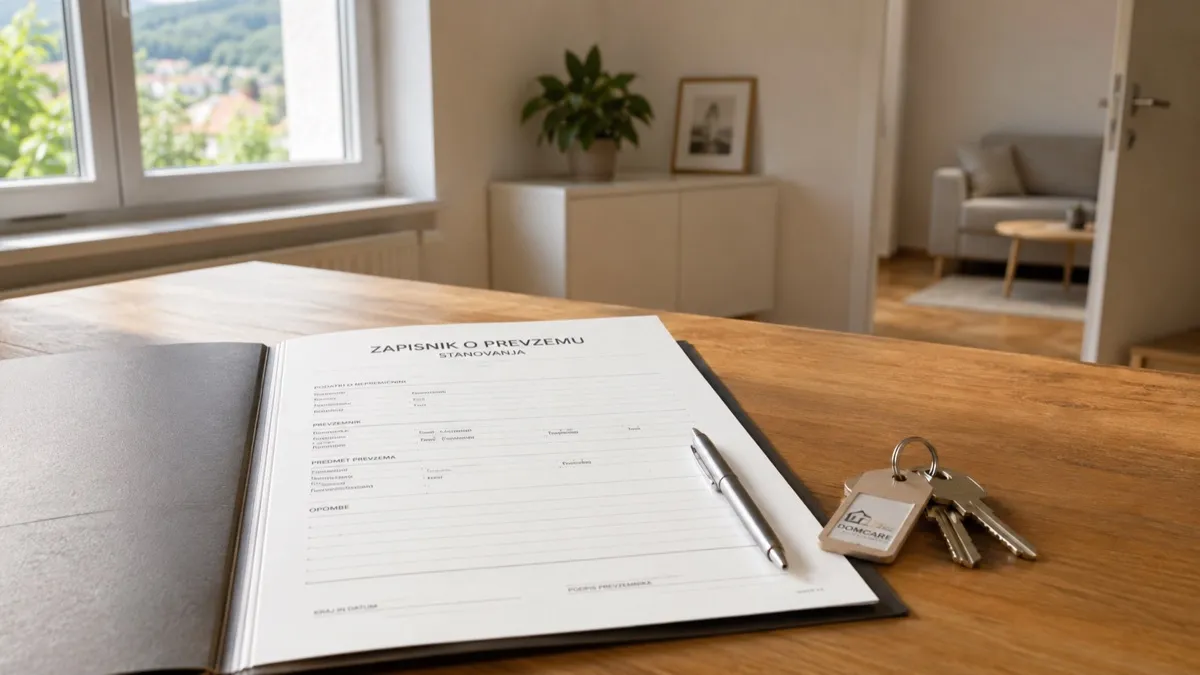
How an owner living abroad can organise the handover and return of an apartment in a long-term let in Slovenia: tenant move-in, oversight and move-out.
Tell us about your situation — we'll agree on the format and a fixed price. The first assessment visit is free.