A Coastal Home from October to March: Off-Season Without Damage
How to prepare a home on the Slovenian Coast for the off-season and get it through unharmed: the risks of the bora wind, salt air and damp from October to March.
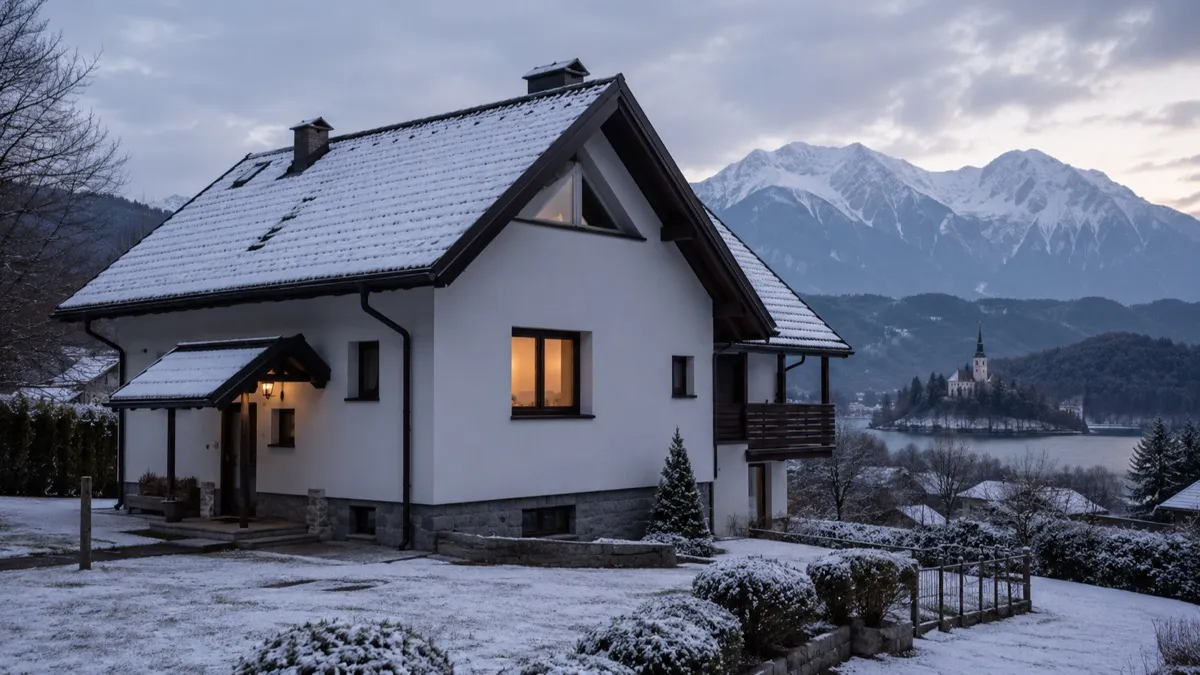
A home by Lake Bled or in the Bohinj valley in winter looks like a postcard: snow on the roof, silence, mountains. But for an owner who only visits now and then, that postcard hides some very real risks. An Alpine winter doesn’t forgive inattention: what would be a minor nuisance in Ljubljana turns into serious damage in the mountains.
This article is about the winter threats that face an Alpine home, and what should be happening to it before you arrive.
It draws on Slovenian seasonal practice, weather data from ARSO, guidance from Eko sklad, and years of experience from the DomCare team caring for homes in the Bled and Bohinj area.
The Bled and Bohinj region isn’t “Slovenia in general”. It has its own winter: it arrives earlier, it’s colder, and far more snow falls here than in the Ljubljana basin or on the coast. The first real frosts can come as early as the second half of October, and the snow cover lasts for months.
For a home that means a heavier load from several directions at once: frost, snow, ice, temperature swings. And all of it acts on the property continuously while you’re somewhere far away. You can’t simply “lock up” an Alpine home until spring — it needs attention precisely during the cold season.
Frozen pipes. The biggest risk. In an unheated or poorly heated home, Alpine frost freezes the water in the pipes; it expands and bursts the pipe. When the frost retreats, the ice thaws — and the home floods. In an empty house, no one notices for a while.
Snow load on the roof. Alpine snow is heavy, and there’s a lot of it. Snow piled on the roof is a serious weight. Roofs in this region are usually built for snow, but the condition of the roofing, gutters and snow-slide zones needs to be monitored.
Sliding snow and ice. Snow comes off a roof in an avalanche — dangerous for people below, for cars, for outbuildings. Ice on paths and steps is a slip-and-fall risk. Icicles are a hazard of their own.
Heating failure. If the boiler breaks down in a frost or the power goes out, the home starts to cool, and a chain reaction begins: cold → risk of frozen pipes → damp. The longer the home goes without heating in a frost, the worse it gets.
Damp and temperature swings. The contrast between frozen walls and occasional warm-ups produces condensation, and condensation in a closed-up home means mould.
Access to the home itself. A driveway buried in snow can make the home physically unreachable at the moment you need it — both for you and for emergency services.
What follows from these risks is that an Alpine home in winter needs not a one-time preparation, but care throughout the entire cold season. In practice that means:
Keeping the heating going. The home is never fully switched off — the heating stays on in frost-protection mode. Someone needs to check that the system is actually working, not just “supposed to be working”.
Regular visits. Every couple of weeks someone comes by: checks that the heating works, looks for signs of freezing or damp, checks the state of the roof and gutters, and makes sure snow hasn’t slid where it shouldn’t. After each visit, a photo report to you.
Checks after snowfalls and storms. After heavy snow or wind, an unscheduled inspection: how did the home handle the load.
Responding to system failures. If the heating breaks or the power cuts out in a frost, that’s an emergency that needs a fast response, before the home has time to cool down.
Keeping access open. The driveway and the paths to the home should stay passable — so that both you and, if needed, emergency services can get through.
A detailed seasonal plan for preparing a home for winter is covered in a separate calendar article — for an Alpine home it applies with an adjustment for the earlier and harsher winter.
Snow deserves separate attention, because in an Alpine region it’s a constant factor, not an occasional event.
The build-up of snow on the roof needs to be monitored; in some cases its removal needs to be arranged. Snow should slide off to where it can harm no one. Paths and steps should be cleared and treated against ice — especially if someone is in the home from time to time over the winter. Gutters mustn’t be clogged with ice, or meltwater will find its way into the walls.
All of this is work that runs all winter, not just once. For an owner who comes for a couple of weeks to ski, it means a choice: arrange the snow tasks through a service, or arrive to a home buried in snow.
Many owners of homes in Bled and Bohinj come precisely in winter — for the ski season. For a trip like that the home should be ready in advance: warmed up, driveway cleared, everything working. No one wants to spend the first day of their holiday thawing out an icy home and digging out the entrance.
Preparing for your winter arrival is easily handled as a One-off Visit or, if the home is already under care, it’s simply part of regular service: by the time you arrive, the property is ready.
DomCare looks after homes in the Bled and Bohinj area with an eye to Alpine specifics. Property Care in winter means regular visits throughout the cold season, heating kept in check, inspections after snowfalls, a response to system failures, and photo reports. Snow tasks, monitoring the roof and gutters, and keeping access open are all part of winter service. Preparing for your winter arrival we cover with a One-off Visit or within Property Care. Seasonal care for the grounds is a separate service.
The easiest way to talk it through: write to us via the form or on WhatsApp.
How is an Alpine home in winter different from an apartment in Ljubljana? Winter in the Bled and Bohinj area arrives earlier, it’s colder, and there’s far more snow. You add the risks of snow load, sliding snow, ice and blocked access — none of which a city apartment has.
Can I just lock up my home in Bled for the winter? No. An Alpine home needs care all through the cold season: heating kept in check, inspections after snowfalls, a response to system failures. A locked-up, forgotten home risks frozen pipes and accumulating damage.
What is the most dangerous thing for a mountain home in winter? Frozen pipes when heating fails or runs too low. Once the ice thaws, the home floods, and in an empty house no one notices for a while.
Does snow need to be cleared off the roof? The build-up of snow on the roof needs to be monitored; in some cases removal needs to be arranged. Roofs in the region are usually built for snow, but the state of the roofing and snow-slide zones is important to track.
How do I get the home ready for a winter ski trip? In advance: warm the home up, clear the driveway and paths, check that everything works. This is done as a One-off Visit before your arrival or it’s part of regular Property Care.
A home by Bled in winter is beautiful — but that beauty needs upkeep. An Alpine winter presses on the property with frost, snow and ice continuously while you’re far away. You can’t lock the home up until spring: it needs care all through the cold season. Then the winter postcard stays a postcard, rather than turning into damage by the time you arrive.
If you have a home in the Bled or Bohinj area, write to us — we’ll tell you how to arrange winter property care.
How to prepare a home on the Slovenian Coast for the off-season and get it through unharmed: the risks of the bora wind, salt air and damp from October to March.
How an owner abroad can keep control of an apartment renovation in Slovenia: what to lock in before the start, the rhythm of oversight, milestone sign-offs and the typical mistakes.
How an owner living abroad can organise the handover and return of an apartment in a long-term let in Slovenia: tenant move-in, oversight and move-out.
Tell us about your situation — we'll agree on the format and a fixed price. The first assessment visit is free.