Moving Furniture Within a Property: 6 Situations When You Need It
What moving furniture within an apartment or house in Slovenia means: the 6 situations when you need it, what the service covers, and how it differs from a full move.
Small tasks keep cropping up in every apartment and house: hang a shelf, assemble a wardrobe, tighten a loose handle, swap out a tap, install an appliance. On their own each is a trifle, but together they add up to a constant background hum — and for a remote owner that is especially inconvenient, since you won’t fly to Slovenia for the sake of one shelf.
This article is about small repairs as a service: what it covers, where the line runs between a “small repair” and a specialist contractor’s work, and how to tell what help your property needs. Understanding that line saves both money and time.
It draws on the DomCare team’s many years of experience carrying out small household repairs in apartments and houses across Slovenia.
A small repair (often called a “handyman” or odd-jobs service) is a minor household job that does not require a specialist licence, project documentation, or major intervention into structure or engineering systems. It is about “fix, hang, assemble, replace” — not “rebuild”.
The key signs of a small-repair task: it takes a limited amount of time, needs ordinary tools, does not touch load-bearing structures, requires no serious intervention into the electrical system or plumbing, and needs no permits. If all the signs line up — it is a small repair.
Mounting and hanging:
Furniture assembly and installation:
Household swaps and minor plumbing and electrics:
Appliance installation:
Minor fixes:
And here is what a small repair is not, and what calls for a specialist or a contracting crew:
The line is not always obvious, and that is normal. The main rule: if a task touches load-bearing structures, gas, or — seriously — the electrics or plumbing, requires permits, or is large-scale finishing, it is no longer a small repair. Such work is carried out by contractors, and Contractor Support helps organise and oversee it.
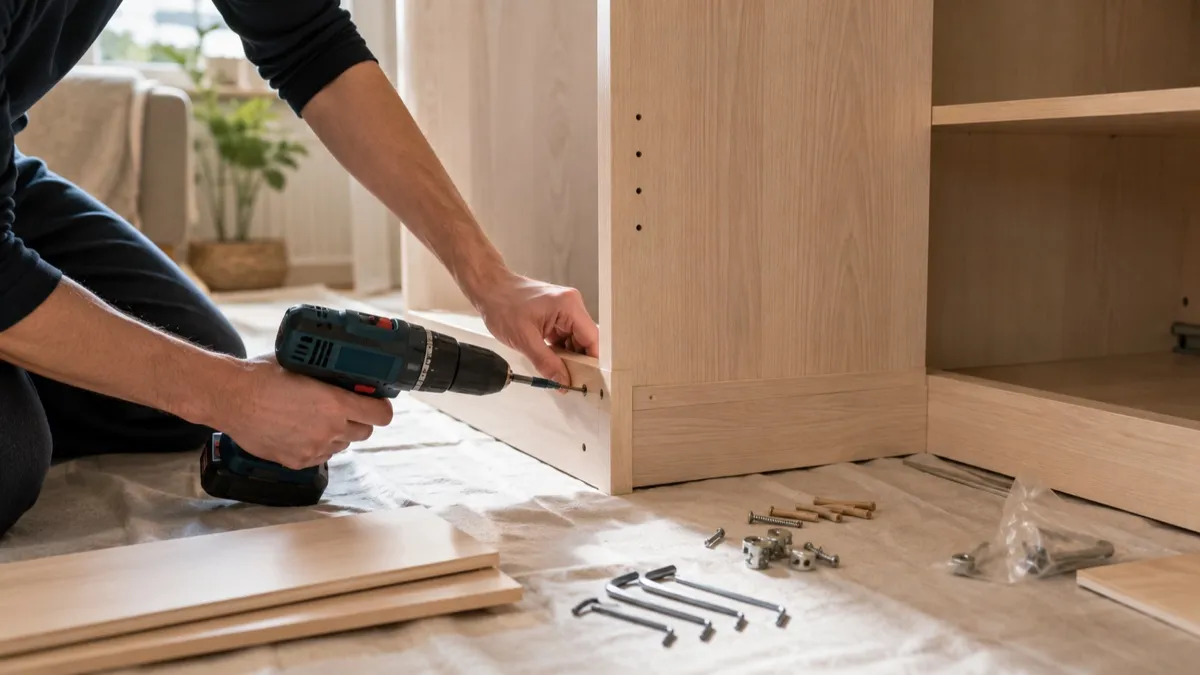
Furniture assembly is the most common standalone task, and it has its own specifics. Buying a wardrobe or a bed is easy; assembling it takes time, tools and care. For a remote owner this is a typical situation: the furniture has been delivered to the apartment, but there is no one to put it together, and the boxes stand there for weeks.
Furniture assembly is a full part of small repairs: unpacking, assembly to the instructions, putting things in place, levelling, adjusting, and where needed securing to the wall (tall wardrobes especially — that is a safety matter), and clearing away the packaging. One visit, and an empty room full of boxes turns into a furnished one.
If you are unsure which category a task falls into — just describe it. A good rule: state the task in one sentence and send a photo. From the description and the photo it is almost always clear whether it is a small repair or a contractor’s job. If a task turns out to be bigger, it is more honest to say so straight away and suggest the right path than to take on something that should be done differently.
It often goes the other way too: you thought a repair was needed, and in fact a small adjustment is enough. And the reverse — “just swap it out” sometimes uncovers a problem that needs a contractor. That is why an inspection and an honest assessment are the first step.
Small repairs rarely exist on their own. More often they are part of a wider context:
In other words, small repairs are one level in the overall system of caring for a property, and tasks flow naturally between the levels.
At DomCare, small repairs means household jobs and furniture assembly on a scale that requires no specialist licence or project. You describe the task and send a photo — we tell you honestly whether it is a small repair or a contractor’s job, and we suggest the right path. You can book it as a one-off task or as part of caring for the property. For work beyond the scope of small repairs, we help organise it through specialist contractors with oversight on site.
The easiest way to discuss it: message us through the form or on WhatsApp.
What counts as a small repair and what doesn’t? A small repair is a minor household job with no specialist licence or project required: hanging things, assembling furniture, swapping out electrical and plumbing fixtures, adjustments, installing appliances. Not included: work inside wiring and pipes, structural work, large-scale finishing, and anything that requires permits.
Is furniture assembly part of small repairs? Yes — furniture assembly is a standard part of small repairs: unpacking, assembly, installation, levelling, securing to the wall, clearing away the packaging.
How do I tell whether I need a small repair or a contractor? Describe the task in one sentence and send a photo. The category is almost always clear from the description. If a task is bigger than a small repair, it is more honest to suggest the right path straight away.
Can I book a small repair remotely? Yes. You need to describe the task, sort out access, and agree on a visit. This is a common situation for owners who are not in Slovenia.
What if a “small” task uncovers a serious problem? It happens: replacing a tap reveals a leak in a pipe. In that case the task is passed to a specialist contractor, and we help organise and oversee the work.
A small repair is about “fix and assemble”, not “rebuild”. Understanding the line between a small repair and a contractor’s job helps you book the right help and avoid overpaying. And for a remote owner, small repairs solve an important problem: household trifles do not pile up for months waiting for your arrival.
Have a task at your property — describe it and send a photo, and we’ll tell you what it is and how it’s best handled.
What moving furniture within an apartment or house in Slovenia means: the 6 situations when you need it, what the service covers, and how it differs from a full move.
What property clearing in Slovenia is, how the process works, the situations where it's needed, and how to approach clearing an inherited home with care.
A closed-up apartment is in a state of dormancy. How to properly start up a home after a long absence and shut it down sensibly when you leave — without smells or breakdowns.
Tell us about your situation — we'll agree on the format and a fixed price. The first assessment visit is free.