Renovating Remotely: Overseeing a Contractor Without Flying In
How an owner abroad can keep control of an apartment renovation in Slovenia: what to lock in before the start, the rhythm of oversight, milestone sign-offs and the typical mistakes.
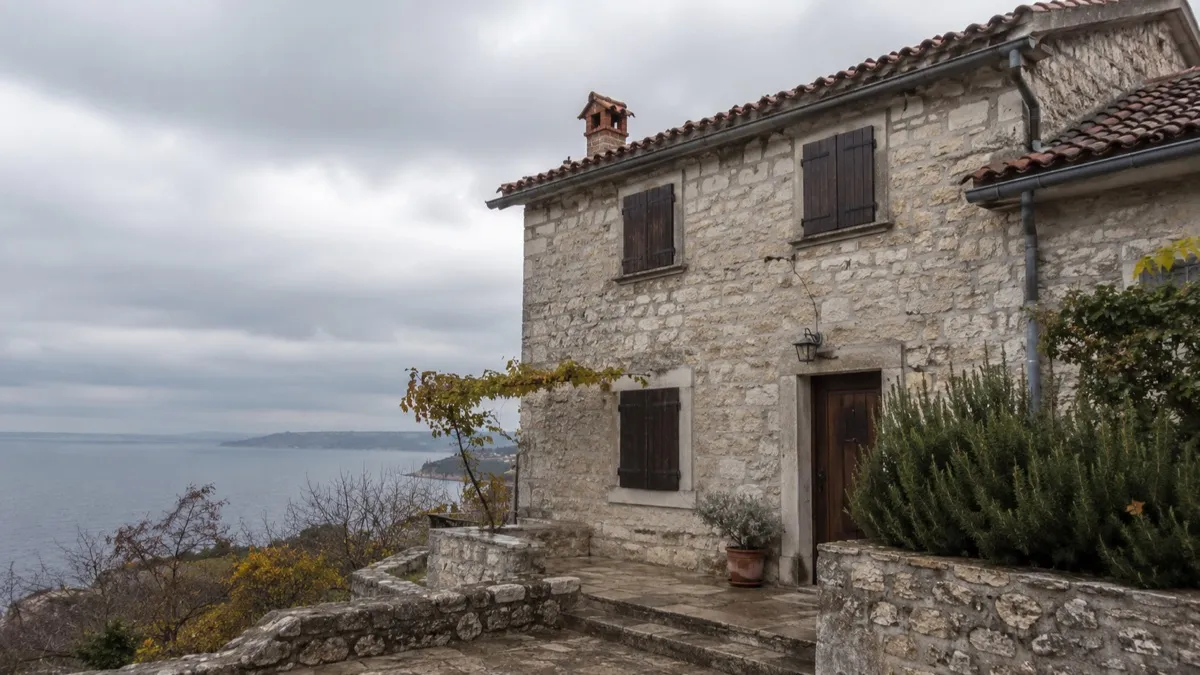
A home on the Slovenian Coast — in Piran, Portorož, Izola or Koper — runs on a different calendar than an Alpine or city property. There is no harsh winter with deep frosts here, but there is an off-season of its own: from October to March, when the tourists leave, the home empties out, and the weather becomes its most active “resident”.
This article is about getting a coastal home through the off-season without damage: what risks the coast has of its own, and what to do from October to March.
It draws on Slovenian seasonal practice, meteorological data from ARSO, and the long-standing experience of the DomCare team caring for homes on the Slovenian Coast.
The main mistake is to apply inland Slovenia’s “winter preparation” logic to the coast. On the coast the winter is milder: deep, sustained frosts are rare, and the threat of frozen pipes is lower than in Ljubljana or Bled. But that does not mean the off-season is safe — the dangers are simply different.
A coastal home in the off-season is attacked by three factors: the bora (burja) — a strong, gusty wind; salt air — a constant corrosive environment; and damp — high, without summer warmth and ventilation. Add the long empty stretch: the tourist season is over and the home stands without people for months.
So the off-season on the coast is not about frost, but about wind, salt and damp. And those are exactly what you prepare for.
The bora. The Slovenian bora on the coast is not just “windy” — it is a serious load. The bora tears off poorly fixed elements, breaks branches, slams unsecured shutters, picks up and hurls light objects, and stresses the roof. After every strong bora episode the home needs to be checked.
Salt air. Sea air is a constant corrosive environment. It speeds up the wear of metal (railings, fittings, fasteners, air conditioners), dries out and ages seals, and leaves deposits on glass and the façade. It is slow but continuous wear, most noticeable when you compare the home’s condition from one season to the next.
Damp and mould. The main “silent” risk. Without summer warmth and ventilation, an empty coastal home soaks up moisture, condensation appears on the walls, and mould forms in corners and behind furniture. Damp ruins the finishes, the furniture, and the very air in the home.
The long empty stretch. A home without people from October to March is half a year in which any small problem develops with no witnesses, and the signs of an empty home pile up.
The off-season begins by closing the summer season.
The heart of the off-season. The home is empty, and its main job is not to soak up damp and to survive the bora.
Fighting the damp. This is key. The home must not freeze through and grow damp: light, periodic heating and ventilation keep moisture from turning into mould. Someone has to make sure the routine is kept.
Regular visits. Once every couple of weeks — an inspection: signs of damp and mould, condition after the wind, leaks, general state. After every strong bora episode — an unscheduled check.
Responding to wind damage. A torn-off element, a damaged shutter, a fallen branch, a clogged gutter — after the bora these need to be found and fixed before a small bit of damage becomes a way in for water.
Tracking salt wear. Not an “urgent” matter, but the off-season is the time to notice that salt has aged the seals or touched the metal with corrosion, and to plan replacements before the season.
Security. An empty coastal home in the off-season is a target for break-ins. Simple measures (visible signs of presence, monitoring) lower the risk.
Closer to spring the home is made ready for the new season.
By the start of the tourist season the home should greet you or your guests in full order.
Many coastal homes are short-term rental properties, active from April–May to September–October. For them the off-season is a “technical window”: a time with no guests, when you can do everything that is impossible to do in season — repairs, updates, deep cleaning, replacing what is worn out. A well-used off-season means that by the opening the property is competitive and ready, rather than being “finished off on the fly” with the first guests.
DomCare cares for coastal homes with an eye to the local specifics — the bora, salt and damp. Property Care in the off-season means closing the season, regular November–February visits with damp and post-wind checks, responding to bora damage, preparing for the March opening, and photo reports. Seasonal preparation, cleaning, garden and grounds care and minor repairs are related services. A one-off preparation for closing or opening the season we cover with a One-off Visit. We work on the coast — Piran, Portorož, Izola, Koper — as well as in Ljubljana, the Bled and Bohinj region and the Kranj region.
The simplest way to talk it through: write to us via the form or on WhatsApp.
Does a coastal home need the same winter preparation as an inland one? No. On the coast the winter is milder and the risk of frozen pipes is lower. But the risks from the bora, salt air and damp are higher. Those are what you prepare for — not a copy of “inland” preparation.
What is the biggest danger to a coastal home in the off-season? Damp. An empty, unheated home soaks up moisture, which turns into mould and ruins finishes, furniture and the air. That is why light heating and ventilation matter.
What is the bora and why is it dangerous for a home? The bora is a strong, gusty wind on the Slovenian Coast. It tears off poorly fixed elements, damages shutters and roofing, and breaks branches. After every strong episode the home needs to be checked.
Does a coastal home need care in winter if it is only rented out in summer? Yes. The off-season is both protection from damp and wind and a “technical window” for repairs and updates that cannot be done while guests are there in season.
When should preparation for closing the season begin? In October, when the tourist season ends: post-summer cleaning, protecting the grounds from the bora, checking the roof and gutters, and dealing with the water.
A coastal home in the off-season is threatened less by frost than by wind, salt, and damp — and by the fact that it stands empty for half a year. A well-handled off-season means closing the season in October, controlling the damp and responding to the bora from November to February, and preparing for the opening in March. Then the home will not only survive the winter without damage but greet the season ready.
Have a home on the Slovenian Coast — write to us, and we will explain how to get it through the off-season.
How an owner abroad can keep control of an apartment renovation in Slovenia: what to lock in before the start, the rhythm of oversight, milestone sign-offs and the typical mistakes.
How an owner living abroad can organise the handover and return of an apartment in a long-term let in Slovenia: tenant move-in, oversight and move-out.
Which winter risks threaten an Alpine home in the Bled and Bohinj area, what should be happening to it while you're away, and how to arrange winter property care.
Tell us about your situation — we'll agree on the format and a fixed price. The first assessment visit is free.