Christmas and New Year: Your Slovenian Home While You're Away
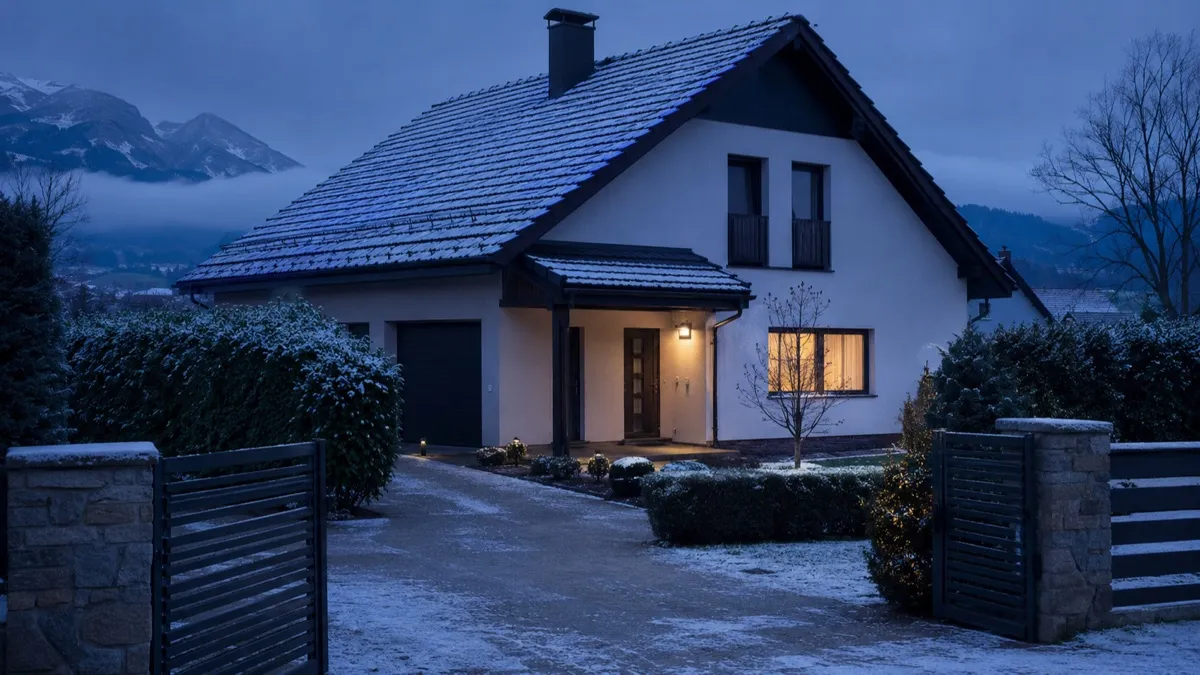
Why the Christmas and New Year holidays are a particular risk period for an empty home in Slovenia, and what to prepare if you're spending them somewhere else.

Short-term rental on the Slovenian Coast — in Piran, Portorož, Izola, Koper — is a seasonal business with a clear rhythm. Seven months of activity from April to October, a peak in summer, and an off-season when the property rests. Understanding that rhythm is the basis of getting through a season with income, not burnout.
This article is about how the coastal rental season works month by month: launch, peak, close, and what makes a season successful.
It draws on tourism data from SURS, the Slovenian short-term rental calendar, and the years of work the DomCare team has spent on operational support for rental properties on the coast.
Coastal tourism in Slovenia is markedly seasonal. Demand spreads out roughly like this: April-May — the ramp-up, the first guests, warm but not yet peak weather; June-September — the peak, maximum occupancy and prices; October — the wind-down, the last guests; November-March — the off-season, demand close to zero.
The main thing follows from that rhythm: a coastal rental is not “year-round work” but an intense seven-month sprint. The earnings are concentrated in the peak, and it’s the peak you need to arrive at prepared.
A season is won before it begins. What needs doing in April-May:
Prepare the property after the off-season. Over the winter a coastal home may have built up damp, traces of the bora wind, wear from the salty air. It needs a review and a fix for whatever turns up — covered in detail in the article on the coastal home off-season.
A deep clean before the season. The property should meet its first guests in perfect order.
Check and restock. Bedding, towels, crockery, appliances — everything should be present and in working order. Anything worn out over last season should be replaced.
Check the access system. Keypad locks, key safes, spare sets — check it all before the first guest, not on them.
Set up the operational process. Who cleans between guests, who greets them, who responds to problems — this should be in place by the start, not improvised on the fly.
The first guests of April-May shape the first reviews of the season — and those reviews will work for you (or against you) all through the peak.
The peak is maximum income and maximum operational workload at the same time. The property is almost constantly occupied, guests change often, sometimes on the same day.
What happens at the peak every week: cleaning and a change of linen between guests (often on the changeover day), check-ins and farewells, responding to questions and breakdowns, restocking consumables, keeping up the grounds and the “face” of the property. This is the operational workload that adds up to 10-15 hours a week in high season — and a significant part of it requires physical presence on the coast.
The peak is not the time to solve organisational problems. Anything not set up by June will break under the load at the peak. That’s why the April-May preparation matters so much.
At the peak, the very pressure points of short-term rental sharpen — the ones covered in a separate article: guest access, breakdowns while a guest is in residence, cleaning on the changeover day, conflict situations, emergencies. In summer, with a dense flow of guests, the cost of a failure at each point is higher: a botched clean or a guest who can’t get in, at the peak, is not just a bad review but a lost, expensive high-season night.
That’s why a well-run operational support is especially important at the peak: cleaning on the booking schedule, access and key holding, greeting guests, a fast response to problems. In detail — in the article on short-term rental support.
When the flow of guests dies down, the season needs to be closed properly:
October is the bridge between the active season and the off-season, and it needs closing just as deliberately as it was opened.
A few principles of a successful season follow from the April-October rhythm:
Preparation decides it. A season is won in April-May. A property not ready by June will be “finished off” on the guests.
The operations have to be set up in advance. At the peak there’s no time to work out who cleans and who greets. That’s set up before the start.
Cleaning is not where you cut costs. In a dense flow of guests, cleaning quality directly determines reviews and occupancy.
The response to problems has to be fast. At the peak every night is expensive, and an unsolved problem costs more than in the off-season.
The off-season is for preparation. Repairs and upgrades are done from November to March, not in season.
DomCare covers the operational side of the coastal rental season. Short-term rental support — responding to problems, coordination at the peak, non-routine situations. Cleaning — on the booking schedule, including the changeover day. Key holding and greeting guests — access and check-in. Preparing for the season and closing it we cover as part of property care or with a one-off visit. You run the commercial side and the income — we take the operational part that can’t be done from another country. We work on the coast — Piran, Portorož, Izola, Koper — and in the other zones of Slovenia.
The easiest way to talk it through: write to us through the form or on WhatsApp.
When does the rental season start and end on the Slovenian Coast? The active season runs roughly from April to October. The peak falls on June-September, April-May is the ramp-up, October is the wind-down. November-March is the off-season with low demand.
When should the property be prepared for the season? In April-May, before the main flow of guests arrives: a review after the off-season, a deep clean, restocking, an access check, setting up the operational process.
Why can’t the peak be “got through on enthusiasm”? At the peak the property is almost constantly occupied, guests change often, and the operational workload reaches 10-15 hours a week. Without a process set up in advance, everything breaks under the load at the peak.
What should be done with the property in the off-season? Switch it to off-season mode (protection against the bora and damp) and use the time for repairs and upgrades that can’t be done with guests in residence during the season.
Can you run a coastal rental while living abroad? The commercial side — yes. The operational side (cleaning, access, response) at the peak — no; you can’t manage without local support, the workload is simply too high and requires presence.
A coastal rental is a seven-month sprint with a clear rhythm: preparation in April-May, the peak in June-September, the close in October, rest in the off-season. A season’s success is laid down before it starts and rests on well-run operations. Whoever arrives at June prepared earns; whoever finishes things off on the fly loses reviews and nights.
Preparing a property for the rental season on the coast — write to us.
Why the Christmas and New Year holidays are a particular risk period for an empty home in Slovenia, and what to prepare if you're spending them somewhere else.
What happens to a garden and home in Slovenia over the summer while the owner is away, why watering and mowing can't be paused, and how to organise care for the whole season.
What to check in a Slovenian apartment or house after winter: signs of damp, the state of the roof and façade, building systems, water and the garden at spring opening.
Tell us about your situation — we'll agree on the format and a fixed price. The first assessment visit is free.